
BEIJING, July 10 (Xinhua) — China is stepping up efforts to integrate artificial intelligence (AI) into its energy sector as the country accelerates digital transformation and advances the sector’s green transition.
DEEP INTEGRATION
China’s National Energy Administration has rolled out a series of policy measures in recent years, providing top-level guidance that has helped drive notable progress in AI-energy integration. The country’s power sector has moved from isolated digitalization pilots to integrated development across the entire industrial chain, with power sources, grids, loads and energy storage becoming more integrated, said Yang Kun, executive vice chairman of the China Electricity Council.
According to industry data, direct investment in digitalization by China’s power sector exceeded 42 billion yuan (about 6.17 billion U.S. dollars) in 2025, ranking among the highest of all industries nationwide.
In the oil and gas sector, AI has been gradually applied in exploration, production, safety, environmental protection and business management, helping shift the industry from experience-based to data-driven decision-making, said Hu Senlin, vice president of the Energy Economics Institute of China National Offshore Oil Corporation.
CHALLENGES REMAIN
Despite this progress, Hu noted that deeper integration of AI and energy still faces challenges, including a shortage of industry-specific large AI models, a limited supply of high-quality industry data, and inadequate mechanisms for cross-enterprise and cross-industry data sharing.
Meanwhile, Lyu Tingyan, deputy general manager of China Three Gorges Corporation, has warned of growing security risks as AI technologies become more deeply integrated into the energy sector. “As automation increases, machines are playing a greater role in decision-making. If systems are maliciously attacked or fed false data, the consequences could be severe,” Lyu said.
HIGH-QUALITY DEVELOPMENT
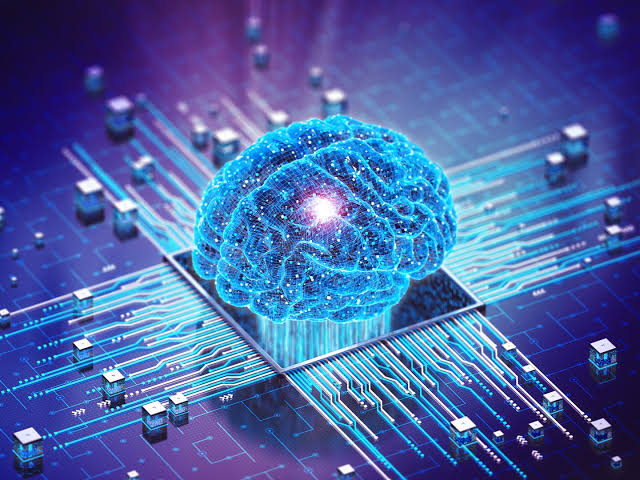
To make AI applications safer and more reliable, Guo Jianbo, an academician of the Chinese Academy of Engineering, suggested using digital twin technologies to build an intelligent “brain” for power system operations and verify AI-generated strategies.