
From Femi Mustapha, in Kaduna
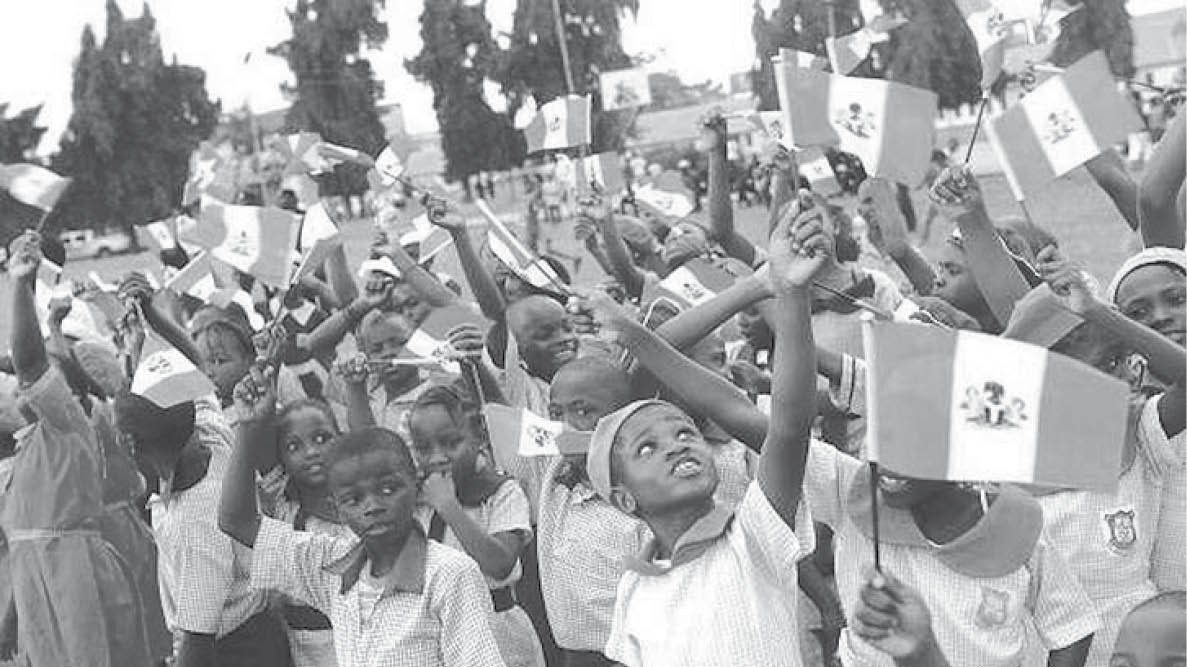
Nigeria joins the world on May 27, 2026, to observe Children’s Day, a day dedicated to celebrating children and reaffirming commitments to their rights, safety, and development.
The observance traces back to the 1925 World Conference on Child Welfare in Geneva and has been celebrated in Nigeria since 1964, with May 27 declared a national holiday in 1993.
This year’s national theme, “Future Now: Promoting Inclusion for Every Nigerian Child,” is a direct call to ensure no child is left behind because of gender, disability, poverty, ethnicity, or location.
State governments across Nigeria have organized activities to highlight inclusion, education, and protection.
In Kaduna State, Governor Senator Uba Sani CON stated that the day should serve as a moment for reflection and renewed action for every Nigerian child, especially those in vulnerable communities. He said that children are the state’s greatest resource and that their protection and education must remain central to government policy.
Speaking through the Commissioner for Human Services and Social Development, Governor Sani reaffirmed his administration’s commitment to expanding access to free and compulsory basic education, improving school infrastructure, and strengthening safe school initiatives across Kaduna’s 23 local government areas. He added that no child should be denied learning opportunities because of conflict, poverty, or disability.
Ondo State Commissioner for Women Affairs and Social Development, Dr. Seun Osamaye, stated that the celebration serves as a reminder of the collective responsibility to protect children’s welfare and future.
She voiced concern over ongoing challenges such as child abuse, neglect, trafficking, child labor, and limited access to quality education.
UNICEF Nigeria has also intensified the call for inclusion. In a message ahead of the day, advocates emphasized that inclusion means the girl in a rural village receives the same quality of teachers as the boy in the city, and that children with disabilities can access classrooms without barriers.
Globally, UNICEF Executive Director Catherine Russell warned that children are experiencing record levels of violence, displacement, and deprivation. In her April 2026 remarks, she noted that 2024 saw over 41,000 verified grave violations against children reported by the UN, the highest number ever recorded, and that 2025 showed a similar trend.
UN Secretary-General António Guterres, in his World Children’s Day message, stated that children’s rights are under attack. “Poverty and emergencies are stealing education. Climate chaos is jeopardizing futures. And new dangers lurk in the online world,” he said, urging the world to listen to children and amplify their voices.
In Nigeria, the challenges facing children remain severe. The UN Humanitarian Country Team reported that nearly 35 million Nigerians, including millions of children, are at risk of severe food insecurity during the June-August 2026 lean season. Across the Northwest and Northeast, an estimated 6.4 million children are likely to be severely malnourished this year.
Governor Sani said Kaduna is responding to the nutrition and learning crisis by expanding school feeding programs and partnering with development organizations to provide meals and learning materials in hard-to-reach areas. He added that protecting children from malnutrition is protecting the future workforce of the state.
Education experts say the out-of-school crisis is worsening. The Federal Ministry of Education estimates that 15 million children aged 5-14 are out of school, with rates as high as 41% in the Northeast and Northwest. Minister of Education Dr. Tunji Alausa said Nigeria needs $345 million annually to reintegrate these children and equip them with essential skills.
Budget gaps remain a major obstacle. Education received N3.53 trillion in the 2026 budget, about 6.1% of total spending, well below the UNESCO benchmark of 15-20%. Experts warn that underfunding hampers teacher training, infrastructure, and learning outcomes, especially for neurodiverse learners.
Security threats worsen the crisis. In May 2026, over 45 pupils, students, and teachers were abducted from schools in Oriire Local Government Area of Oyo State. Similar abductions were reported in Borno, where students remain in kidnappers’ dens. The Yoruba Council of Elders and parents’ associations have joined activists in calling for immediate rescue efforts.
A coalition of civil society groups, led by Jessica Bartholomew, issued a joint appeal on Children’s Day for President Bola Ahmed Tinubu to intervene. “Let’s join our hands and our voices to call our president, Bola Ahmed Tinubu, to rescue our children. The future of tomorrow is in the forest with terrorists, and we are all living normally like nothing is happening in this country,” the statement read. “They are supposed to be celebrating Children’s Day with us, but they are taken to a thick forest without shelter, water, food, and to top that, they are being tortured.”
Governor Sani said Kaduna has stepped up community policing and school security measures to prevent similar attacks, emphasizing that “a child who fears going to school cannot learn.” He urged the federal government to coordinate a quick, multi-agency response to secure the release of the Oyo and Borno students.
In response, the Federal Ministry of Defense said security forces have intensified operations in the affected areas. A ministry spokesperson stated that intelligence-led operations are ongoing and that the government’s priority is the safe rescue of all abducted children without further endangering their lives.
Child protection advocates in Ondo and other states say abuse, trafficking, and bullying are increasing alongside abductions. They are calling for stronger collaboration among parents, schools, communities, and faith-based organizations to create safe environments for children. Governor Sani echoed the call, saying the state’s child protection framework is being strengthened to ensure a quick response to cases of abuse.
Health experts warn that malnutrition is damaging young minds. Dr. Frederick Unuigbokhai said malnutrition causes long-term harm to brain development, reducing intelligence, memory, and attention span. He emphasized that maternal health is the foundation of early childhood development.
Inclusive education is emerging as a vital issue. Educationist Ikeako noted that children with autism, ADHD, dyslexia, and other conditions are often labeled as slow or difficult rather than supported. She said Nigeria must go beyond policy discussions and make inclusive learning a practical national priority. Governor Sani said Kaduna is training teachers on inclusive practices and equipping schools with assistive learning materials.
Activists say inclusion is an investment, not a cost. Lawrenta Enigmatic Smiles noted that Nigeria has over 40 million children under 15 years old. “If we educate, protect, and include them today, we’re building the doctors, teachers, innovators, and leaders of tomorrow,” she wrote in a public message.
UNICEF’s “Nigerian Child 2025 Report” found that two out of three children live in multidimensional poverty, lacking healthcare, education, nutrition, and clean water. More than half experience violence before age 18, and two in five girls are married before 18.
Despite the challenges, progress has been made. UNICEF said Nigeria expanded routine immunization, launched campaigns to end child marriage, improved access to clean water for over five million people, and enrolled more children in school than at any time in the past decade.
Wafaa Saeed, UNICEF Nigeria Representative, said the statistics are sobering but demonstrate that change is possible with coordinated effort. “Millions of children are getting vaccinated, millions are back in school, and more families are accessing clean water and social protection. These are victories worth celebrating,” she said.
As Nigeria marks Children’s Day 2026, Governor Sani urged parents, traditional rulers, and civil society to join the government in monitoring schools, reporting abuse, and supporting out-of-school children back to class. “The future we desire begins with the investment we make in them today,” he said, adding that Kaduna will continue to prioritize children in every budget and policy decision.