
By Hammeed Mamman Bello, PhD
The year 2026 has seen turbulence in the global economy on account of the energy crisis in the Middle East ignited by the United States of America and Israel’s war on Iran. The world stands worried as the uneasy ceasefire talks between US and Iran rise and fall without concrete resolution of the disputes, even as a diminuendo and counterpoint crescendo of voices persist. This is added to the lingering war between Russia and Ukraine over territorial and strategic disagreements. These wars have foisted severe economic pressures on the world economy with countries in the Global North as well as the Global South witnessing economic losses, revenue cuts and slower growth, necessitating increased multilateral engagements to stem the tide.
In the face of these global economic dilemmas and uncertainties, political and business leaders met in Dalian, Liaoning Province in China for the 17th Annual Meeting of the New Champions of the World Economic Forum. Dalian is a modern port city on the Liaodong Peninsula, at the southern tip of China’s Liaoning Province. It is the second largest city of Liaoning Province, after Shenyang, the provincial capital. It is the third-most populous city of Northeast China after Shenyang and Harbin. Today, Dalian is a financial, shipping, and logistics center for East Asia, according to Google.com.
The key objective of the Dalian meeting was the desire by countries to engage and cooperate more strategically to expand the frontiers of trade and diplomacy to deliver growth and stability to individual countries and the global community as a collective. The three-day event, which began on June 23, brought together more than 1,700 leaders from the business, government, academic, and media communities from over 90 countries and regions to discuss ways to boost world economic growth and cooperation.
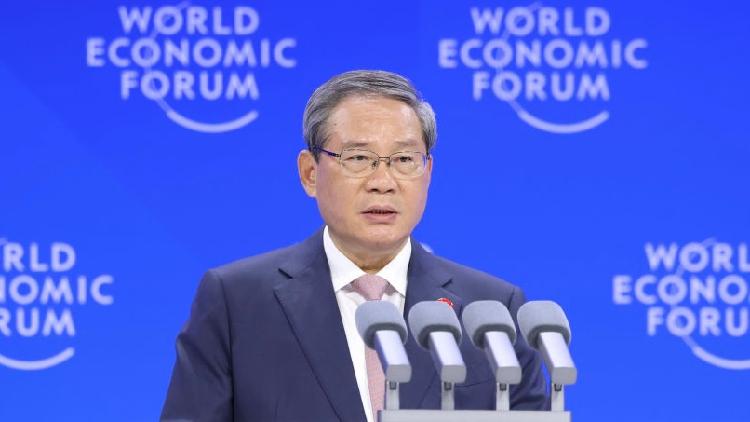
A key feature of the meeting was the speech by the Chinese Premier Li Qiang which drew attention to how China has remained stable and prosperous despite the economic shocks following the Middle East war and the Russia/Ukraine war, coupled with the protracted tension between free trade and protectionism on one hand, and unilateralism against multilateralism on the other.
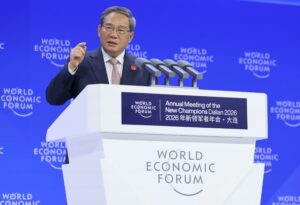
Premier Li’s model of China’s prosperity initiatives centered around four keywords – stability, innovation, dynamism, and integration, which he said present a comprehensive outlook of China’s economy, sketching out both the current picture and future trajectory. “We are confident and capable of sustaining and harnessing this strong momentum to keep writing new chapters in China’s high-quality development,” Premier Qiang said.
While commenting on the theme of the meeting, “Innovating at Scale,” Premier Qiang said it points to a critical factor in global economic development today. He cited President Xi Jinping to have noted that innovation drives development and innovation shapes the future. “Let me take the opportunity of today’s gathering to share with you China’s innovation stories and offer some thoughts on global innovation cooperation based on China’s economic development practice,” he said.
He noted that the year 2026 marks the launch of China’s 15th Five-Year Plan for economic and social development, and that since the beginning of the year, there has been increased volatility in the international landscape as geopolitical conflicts erupted one after another. “Global economic recovery, fragile as it was, has now come under greater strain. Against this backdrop, China’s economy got off to a good start. It withstood the challenges, forged ahead and demonstrated strong resilience and a promising outlook.”
According to the Premier, China’s stable economy grew by 5% in the first quarter and has maintained a sound momentum in the second quarter. “We are seeing growth in corporate profits, a moderate rebound in prices, and continued improvement in people’s lives. Stability may not seem much on an ordinary day. But, when China’s economy, at a massive volume of RMB140 trillion ($20.6 trillion), continues to register steady and healthy growth despite the shocks of global energy shortages and severe supply-chain disruptions, when it continues to bring much needed certainty to this increasingly uncertain world and plays a vital role as a safe harbor, such solid and robust stability is all the more precious,” he said.
In respect of innovation, he said that after years of endeavor and accumulation, China has become a hub of rapidly emerging new technologies, new products and new business models. He noted that in the first half of the year, multiple types of commercial rockets have been successfully launched, and technologies such as quantum information, integrated circuits and nuclear fusion have been advancing at an accelerated pace.
He added that the artificial intelligence sector has seen explosive growth. “Several major AI models have reached new milestones in performance, daily token usage has hit several hundred trillion and ranked first in the world by the end of May, and embodied intelligence has moved into large-scale commercial application.” In his words: “With brilliant frontier innovations quickly sparking off a sweeping transformation of growth drivers, China’s economy has taken on a new look and gained renewed energy.”
He said: “We have prioritized building innovation platforms. Of the world’s top 100 innovation clusters, 24 are in China, ranking first in the world for three consecutive years. Professional, differentiated and specialized industrial clusters spread across the country, from the one-hour electronic information innovation circle in the Yangtze River Delta, the one-hour motorcycle industrial circle in Chongqing, to the 30-minute supporting circle in Shenzhen’s Robot Valley.”
He also gave a breakdown on the keyword of ‘dynamism.’ He said China’s supersized market continues to unleash demand potential, especially in services, green and new types of consumption, and that tourism, performing arts, and sports events easily draw large crowds, with tickets often sold out in seconds.
“Consumer favourites such as smartwatches, smart glasses, and other smart devices have seen sales multiply. Flows of people, goods, information, and capital are highly vibrant. Over 550 million express deliveries are handled per day, more than the total of all other countries combined. These are all vivid footnotes to the surging vitality of China’s economy, and true reflections of the dynamism of the Chinese market, embodying the rich diversity and high growth potential of China’s domestic demand,” he told the gathering.
In respect of ‘integration’, Premier Qiang said at a time of rising unilateralism and protectionism, China remains as committed as ever to opening up further. “We have extended zero-tariff policies to 63 countries, stayed as the world’s second-largest import market for 17 years running, and recorded an import growth of 20.5% in the first five months of this year, significantly higher than export growth.
“We have also launched a number of “Export to China” promotional events to make available more channels for high-quality foreign products to enter the Chinese market, which has been well-received by countries around the world. For China, integrated development with the world has never been an expediency, but a strategic decision made in line with the trend of history and based on our own development philosophy. In pursuing development, China does not seek to move faster by going alone. Rather, we want win-win cooperation with all in the world so that we can go far together.”
Qiang used the occasion to clarify some misunderstandings around the alternative use of the expression “China shock 2.0”, which he correctly referred to as “China opportunity 2.0”. He said China’s big market and low-cost production factors provided “market dividends” for the world.
“Today, while continuing to provide even greater “market dividends”, China is also offering more and more “innovation dividends” with its technological progress and industrial upgrading. What these combined dividends generate for the world are greater opportunities and potential of development. For enterprises around the world, “China opportunity 2.0” means across-the-board innovation empowerment and high-return investment opportunities,” he said.
Comments by participants from technology, biomedicine, environmental protection, and education shed more light on the impact and lessons of the Dalian meeting. Some were of the opinion that it was very refreshing in listening to Premier Li’s comments on innovation for a focus, not just innovation for the sake of it or just trying to grab power. Li was believed to have centered on how innovation could spur global cooperation and shared progress, not just on how innovation can be in the hands of selected powerful nations. Some other participants who spoke on record, noted that over 20 per cent of the world market are in China, and that if you want to invest in the future, you have to invest in China. The large investments that are going into innovations and technology in China, especially in wind energy, is good for the environment, it was observed. Participants also observed that despite global volatility, China has been a stable market which will enhance stability in the global economy.
For Africa and Nigeria, the Chinese Ambassador to Nigeria, Yu Dunhai spoke at separate public forums in Abuja and elsewhere recently, then apparently reflecting views expressed in Premier Qiang’s dialectic on China’s win-win diplomacy.
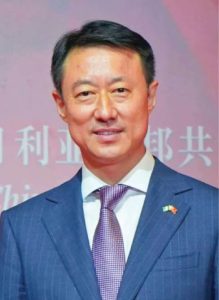
Dunhai highlighted the increased cooperation between African countries and China. This could further broaden existing cooperation in the Belt and Road Initiatives (BRI), and the Forum for Africa and China Cooperation (FOCAC). Dunhai noted that unilateralism and protectionism pose challenges to countries, especially the developing ones, which necessitates the need for win-win collaboration as advanced by China.
Dunhai also reaffirmed the upgrading of Nigeria’s bilateral relations to a comprehensive strategic partnership which has further expanded the ties and exchanges between both countries. He gave indication that China will work with Nigeria to expand exports under the existing zero-tariff regime on Nigerian goods. He also revealed that Nigeria’s export to China has increased to 110% with prospects of more improvements. Dunhai also gave indication he was working with the presidential committee on National Agency for Science and Engineering Infrastructure (NASENI) to aid technology transfer from China to Nigeria. To my mind, these innovative partnerships are a combination of soft power and constructive diplomacy which will potentially deliver modernization, advancement and win-win for both countries, especially if Nigeria steps up its export capacities and diversifies from export of raw materials and natural resources to finished products.
Dr. Hammeed Mamman Bello wrote in from Abuja.