From Edirin Robinson, in Kaduna
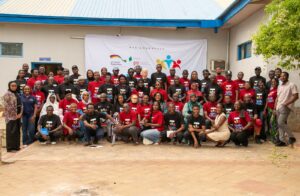
The PEACECORE ll Project, funded by Deutsche Gesellschaft für Internationale Zusammenarbeit (GIZ), has engaged 60 media personnel including social media influencers, and journalists in Kaduna for a 3-day training tagged *media for peace.”
The Project, implemented by LIDA Network and Media in Cooperation and Transition (MiCT), aims to strengthen capacities for responsible reporting, and support peaceful coexistence in vulnerable communities across Nigeria.
Participants were equipped with skills to leverage on digital tools to address issues on information disorder including hate speech, fake news, and produce impactful storytelling.
Addressing the participants, the Executive Director of LIDA Network, Irene David-Arinze, opined that, the training was expedient, especially as the election season drew closer, to shape narratives to promote social cohesion.
She explained that the initiative was designed to equip journalists with the skills to de-escalate tensions, particularly those linked to religious and ethnic conflicts in states such as Kaduna, Plateau and Adamawa.
“The training is focused on helping journalists identify and address misinformation, disinformation and mal-information, while discouraging sensational headlines that could trigger unrest.”
Irene who led a session on communication for development and peacebuilding, harped on the role of the media in shaping public perception through storytelling which can either trigger or prevent conflict.
“We want to see how we can leverage the power of the media to douse tension, especially around religious issues and ethnic crises, and ultimately promote development and peacebuilding in our communities.
“The way stories are framed can influence how audiences perceive issues; some people only read headlines. So, it is important that journalists are responsible in how they tell their stories, they must be objective and not one-sided,” she explained.
Speaking on the outcomes of the training, the Executive Director was optimistic that the participants would deliver on objective and balanced reporting that would counter faker news and drive peace especially in vulnerable communities.
She also called for stronger collaboration between journalists and the wider community. Acknowledging the challenges media professionals face, she encouraged them to remain committed to ethical standards and credible sourcing.
A peace building practitioner and development consultant, Richard Dambo, said the training as a component of the PEACECORE ll Project, addresses inclusion by bringing together both youths and veterans in the media space.
“It is very important because it does not just train only journalists, it also trains young people who have a voice on social media. This gives them the opportunity to rub minds, share ideas and experience both sides.
“Most of the misleading narratives we see is being peddled not only by journalists but by people who just have phones and feel they could actually create any content because they want to be influential overnight, not minding the misleading narrative.”
He tasked Journalists to be conscious when reporting on conflict issues, employ the principle of do-no-harm, assess their language and ensure reports are neutral to de-escalate tension.
One of the facilitators Murtala Abdullahi informed participants on available and accessible tools for impactful storytelling. He shared his expertise on leveraging digital tools for fact checking and peace building reports.
Murtala who is a researcher on security and climate change, observed that some tools and skills are new to some of the participants, hence the training is needed to inform them of latest solutions that can support storytelling.
“Journalists should be advocates who are pushing for dialogue, solutions to highlight the victims of conflict and violence. They can also be tools for holding people accountable, whether in terms of government or our teachers of climate.
“The world is changing a lot, we’re using more and more digital tools, the way we use digital tools to communicate on social platforms, it means that as journalists the medium in which we share our information is changing.
“Nowadays, a platform that used to print a million copies of newspaper, probably does not do a million anymore or even 500,000 anymore. So sharing news stories are now on WhatsApp, Twitter, Facebook, Instagram, and that requires new form of knowledge, skills, investment and resources.
“So the idea was to let journalists know that there are available tools for telling stories, show them how to access those tools and also teach them some of the skills they need because also understanding how social media works is important to ensure that your story gets to the right audience.”
Murtala noted the increase of misinformation, disinformation and fake news on social media, and the need for journalists to counter that form of narrative. He taught on leveraging fact checking tools to ensure identity, verify, and dispel misconceptions on the digital space.
On the issue of funding and support for investigative reporting, he highlighted organizations that were willing to collaborate with journalists on investigative reports, and shared how participants can assess these funds and support for their reports.
Expressing her gratitude for the training, one of the participants, Jerushia Zeechat, said the lessons from the session has motivated her to channel her contents on human angle stories.
She promised to leverage on digital and social media tools to create contents that drive accountability and peace.