By Garba Abdullahi Bagwai
The Bayero University Kano (BUK) has reaffirmed its commitment to promoting research, innovation and community participation as part of efforts to address environmental challenges and the growing impacts of climate change.
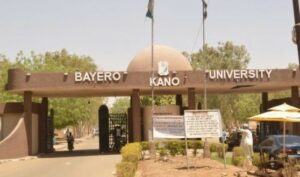
The Vice-Chancellor of the university, Professor Haruna Musa, who was represented by the Deputy Vice-Chancellor (Academic), Professor Ahmed Tsauni, stated this on Monday while delivering the keynote address at the 2nd International Conference organised by the Faculty of Earth and Environmental Sciences.
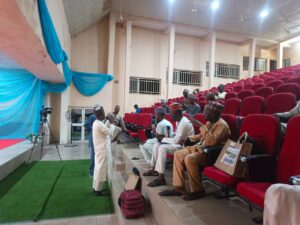
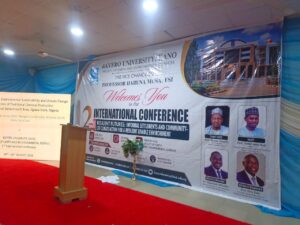
The conference was themed, “Resilient Futures: Informal Settlements and Community-Led Climate Action for a Resilient Livable Environment.”
Professor Musa described the conference as timely, noting that residents of informal settlements are increasingly exposed to the effects of climate change, including flooding, heat stress and erosion.
He reiterated the university’s readiness to provide evidence-based research to guide policy development, as well as train professionals capable of designing and developing sustainable cities.
«“I am confident that the conference will generate meaningful ideas, strengthen collaboration and inspire practical actions towards more resilient and livable environments,” he said.»
The Vice-Chancellor commended the Faculty of Earth and Environmental Sciences for organising the conference, expressing hope that its deliberations would generate ideas capable of addressing the challenges of informal settlements in Nigeria and finding practical solutions to climate change and other environmental problems affecting communities.
Also speaking, the Dean of the Faculty of Earth and Environmental Sciences, Bayero University, Professor Abdul-Azeez Umar Raji, said the conference was coming at a time when more than one billion people globally live in informal settlements.
He described people living in such settlements as among the most climate-vulnerable populations in the world, but noted that they are often treated as problems to be cleared rather than communities that should be engaged in finding solutions.
Professor Raji said Nigeria’s climate commitments, including a target of reducing emissions by 32 per cent by 2035 and achieving net-zero emissions by 2060, could not be achieved while millions of urban residents remained outside sustainable development plans, particularly the Sustainable Development Goals.
«“It is essential that communities are not treated merely as beneficiaries, but as active partners and leaders in developing sustainable cities and communities.”»
He noted that houses in informal settlements are often built on floodplains and alongside drainage channels, with little or no infrastructure to protect residents from environmental hazards.
According to him, the conference provides an important platform for exchanging knowledge, sharing practical experiences, strengthening partnerships and exploring policies that can promote inclusive, climate-resilient and livable environments.
The two-day conference was attended by scholars, policymakers, professionals, community leaders and students from within and outside Nigeria.