
By Adamu Lawal Toro
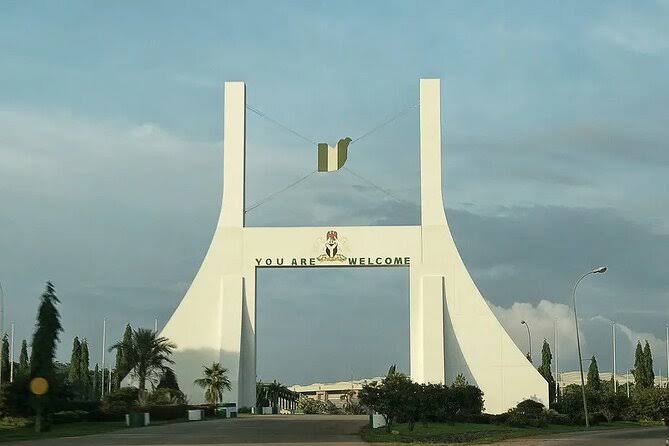
Abuja, Nigeria’s capital city, is often celebrated as a symbol of national ambition, wide boulevards, master-planned districts, gleaming interchanges, and an urban layout that, on paper, rivals some of the most organized cities in the developing world.
Visitors arriving for the first time are usually struck by its orderliness compared to the chaos of many other Nigerian cities. The roads are expansive, the traffic relatively disciplined, and the skyline steadily evolving.
But beneath this impressive exterior lies a surprisingly basic and persistent problem: the absence of adequate road signage and clear markings. It is a contradiction that is as frustrating as it is dangerous. For a city that prides itself on modern infrastructure, Abuja often leaves motorists especially visitors guessing their way through major intersections, roundabouts, and highways. The result is confusion, missed turns, abrupt lane changes, and, in some cases, avoidable accidents.
The irony is hard to ignore. Billions of naira have been invested in constructing highways, flyovers, and interchanges, yet the comparatively modest cost of proper signage and road markings appears to have been overlooked. This raises an important question; what does it really cost to install and maintain basic road signs in a city like Abuja?
The answer, in financial terms, is relatively little especially when weighed against the scale of existing infrastructure investments. Road signage, directional signs, lane markings, reflective studs, speed indicators, and warning signals—are among the least expensive components of urban transport systems. Yet their value is immeasurable.
Without them, even the most sophisticated road network becomes inefficient. Consider the experience of a first-time visitor driving from the Nnamdi Azikiwe International Airport into the city. The road is smooth, the lanes are wide, and the journey should be straightforward. But at critical junctions, the absence of clear directional signs forces drivers to rely on guesswork, mobile navigation apps, or sheer luck. A wrong turn can add unnecessary minutes or even hours to a trip.
Even residents are not immune. Abuja’s rapid expansion has seen new districts emerge and old routes modified. Without consistent signage updates, even regular commuters find themselves second-guessing familiar routes. The problem is compounded at night, when poor or non-reflective markings make navigation even more hazardous.
This is not merely an inconvenience; it is a safety issue. Globally, road signage is recognized as a critical component of traffic management and accident prevention. Clear lane demarcations help prevent collisions. Warning signs alert drivers to sharp bends, pedestrian crossings, or merging traffic. Directional signs reduce last-minute lane changes, which are a major cause of accidents in urban areas.
In Abuja, the absence or inconsistency of these features undermines the very purpose of its well-built roads.
There is also an economic dimension to this problem. Abuja is not just a political capital; it is a hub for diplomacy, business, and tourism. Every year, it hosts international conferences, government delegations, and investors. For many visitors, their experience navigating the city shapes their perception of Nigeria as a whole.
A city that cannot clearly guide its visitors from one district to another sends the wrong message about attention to detail and urban management.
Moreover, the reliance on digital navigation tools is not a substitute for proper signage. While apps like Google Maps are helpful, they are not foolproof. Network issues, outdated data, and battery limitations can leave drivers stranded. Road infrastructure should not depend on personal devices to function effectively.
So why does this gap persist? Part of the problem lies in how infrastructure is conceived and executed. In Nigeria, large-scale construction projects often prioritize visible, high-impact elements roads, bridges, and buildings while neglecting the less glamorous but equally essential components like signage, drainage maintenance, and pedestrian infrastructure.
These “small things” are often treated as afterthoughts rather than integral parts of the project design.
Another issue is institutional fragmentation. Responsibility for road construction and maintenance in Abuja is shared among multiple agencies, including federal authorities and the Federal Capital Territory Administration (FCTA). In such a system, signage can fall through the cracks neither fully owned nor consistently maintained by any single authority.
There is also the question of maintenance culture. Even where signs exist, many are faded, damaged, or obscured by overgrown vegetation. Without a structured maintenance regime, initial investments quickly deteriorate, rendering them ineffective.
Yet, none of these challenges are insurmountable. The first step is a shift in mindset, recognizing that signage is not an optional add-on but a core component of road infrastructure. Every new road project should include a comprehensive signage and marking plan from the outset, with dedicated funding and clear implementation timelines.
Second, there must be accountability. A single agency or a clearly coordinated framewor should be responsible for the installation and maintenance of road signs across Abuja. This would eliminate the ambiguity that currently allows the issue to persist.
Third, technology can be leveraged to improve outcomes. Reflective paints, solar-powered signs, and smart traffic systems are increasingly affordable and can significantly enhance visibility and safety, especially at night.
Public-private partnerships could also play a role. In many cities around the world, advertising rights are integrated into road signage systems, allowing private firms to fund installation and maintenance in exchange for controlled advertising space. Such models could be adapted to Abuja, reducing the burden on public finances.
Finally, there is a need for regular audits. Just as roads are inspected for structural integrity, signage and markings should be periodically reviewed to ensure they remain clear, accurate, and visible. At its core, the issue of road signage in Abuja is not about cost, it is about priorities.
A city that can invest heavily in highways and interchanges can certainly afford the relatively modest expense of guiding its users safely and efficiently. The real challenge lies in bridging the gap between ambition and execution, between grand design and everyday usability.
Abuja was envisioned as a model capital orderly, functional, and reflective of Nigeria’s aspirations. In many ways, it has lived up to that vision. But until the “small things” like signage and road markings are given the attention they deserve, the city will continue to fall short in a fundamental aspect of urban life.
Because in the end, infrastructure is not just about what is built it is about how well it works for the people who use it.
Toro lives in Wuse zone 7