
From Femi Mustapha, in Kaduna
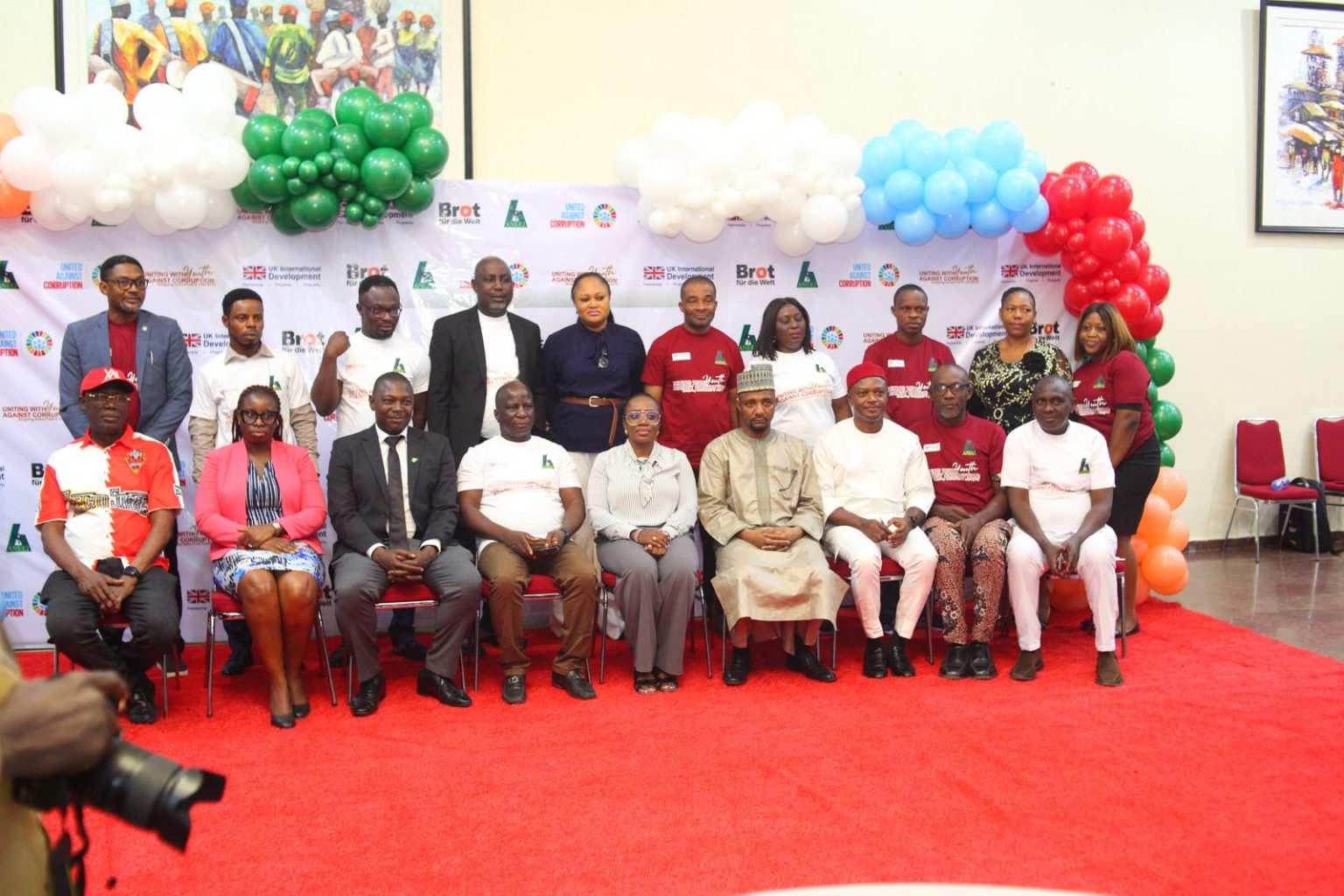
The Africa Network for Environmental and Economic Justice (ANEEJ) hosted its 2025 International Anti-Corruption Day Public Dialogue on a crisp December morning at the Rockview Hotel in Abuja, Nigeria to examine the impacts of corruption on underdevelopment.
The event, themed “Uniting with Youth Against Corruption: Shaping Tomorrow’s Integrity,” brought together distinguished guests, government officials, civil society partners, media representatives, development partners, and a vibrant gathering of young Nigerians to discuss how corruption undermines development, public trust, human rights, and national prosperity.
In his welcome address, Rev. David Ugolor, Executive Director of ANEEJ, expressed gratitude to all participants and highlighted Nigeria’s recent advancements in asset recovery, beneficial ownership transparency, anti-money laundering reforms, and citizen accountability.
He explained that the event is anchored in two major ANEEJ programs: the Nigeria Illicit Finance Resilience Project, supported by the Foreign, Commonwealth and Development Office (FCDO). This initiative strengthens institutional and civil society capacity to combat illicit financial flows and improve asset recovery. The second program, “Tackling Poverty through Livelihood Support, Advocacy for Social Protection, Climate Justice, and Anti-Corruption,” funded by Bread for the World (BftW) of Germany, aims to deepen citizen engagement, enhance youth leadership, and connect anti-corruption work with social protection and climate justice efforts.
Rev. Ugolor outlined three objectives for the dialogue: to deepen youth understanding of the drivers and impacts of corruption and illicit financial flows; to create a platform for young people to engage directly with government, development agencies, the private sector, and civil society stakeholders; and to forge partnerships that will sustain youth-led anti-corruption initiatives beyond the event.
He emphasized that addressing corruption cannot be the sole responsibility of the government. Young attendees were urged to ask bold questions, demand accountability, and propose innovative solutions.
In a special address, Nkemdihim Uzor, a Senior Programme Manager from the FCDO, read a statement expressing the UK’s commitment to supporting Nigerian youth in the fight against corruption. She noted the partnership’s focus on combating illicit financial flows, strengthening asset recovery mechanisms, and promoting transparency within governance institutions.
Ulrike Bergmann from Bread for the World in Germany delivered a goodwill message, extending warm regards from the organization and emphasizing the transformative power of youth to challenge entrenched structures that perpetuate corruption, poverty, and exclusion. She highlighted the joint project “Tackling Poverty through Livelihood Support, Advocacy for Social Protection, Climate Justice, and Anti-Corruption” as a reflection of Bread for the World’s long-standing commitment to human dignity, good governance, and youth empowerment. She called for collaborative action across continents to achieve sustainable development.
In her remarks, Mrs. Juliet Ibekaku-Nwagwu, Executive Director of the African Center for Governance, Asset Recovery, and Sustainable Development, emphasized that youth are not just beneficiaries of reform but essential partners and a driving force behind sustainable change.
She painted a stark picture of the costs of corruption in Nigeria—dilapidated schools lacking textbooks, underpaid lecturers, a broken health sector without medicine, and communities denied the investments that could transform livelihoods.
Representing the African Center, Mrs. Nma Nnaobi-Ayodele stressed that these structural losses can only be remedied through leadership, integrity, and the collective civic will that resides most powerfully in the nation’s youth.
According to her, the African Center has recently intensified its engagement with young professionals, notably through a sensitization visit to the Nigerian Law School.
She surmised that during the visit, the Center emphasized the ethical obligations of the legal profession, the realities of anti-money laundering (AML) and counter-terrorist financing (CFT) obligations, and the pivotal role lawyers play in either facilitating or preventing illicit financial flows.
She added that the African Center is working at national, regional, and international levels to deepen the understanding of transnational organized crime, illicit financial flows, money laundering, and terrorist financing, ensuring that the proceeds of crime are used to restore justice to the victims of corruption.
She disclosed that crucial support for these efforts comes from the Foreign, Commonwealth & Development Office (FCDO), whose funding has enabled the translation of policy into practice and built sustainable frameworks for tackling corruption.
Addressing the youth directly, Mrs. Juliet Ibekaku-Nwagwu called on them to embody integrity now, speak up when norms erode, hold their peers to account, and seize opportunities to learn the technical aspects of good governance—including AML, CFT, and asset recovery.
“Those skills are not dry; they are powerful tools for justice,” she urged, reminding them that they are the future captains of industry, activists, and public‑sector leaders who will insist on accountability.
She calls on partners, governments, civil society, and donor agencies to adopt a practical, collaborative approach, commit to measurable targets, transparent reporting, and shared responsibility for outcomes.
International Anti-Corruption Day, according to her, is more than a date on the calendar—it is a summons to sustained action that combines youthful energy with durable institutional reforms, ensuring that recovered assets are repurposed for development and that corruption no longer blocks the prosperity the Nigerian people deserve.
Dr. Musa Aliyu SAN, Chairman of the Independent Corrupt Practices and Other Related Offences Commission (ICPC), was represented by Godwin Bashir, who conveyed the commission’s resolve to build a generation of anti‑corruption champions.
Bashir encouraged the youth present to visit the ICPC website to learn more about illicit financial flows and to actively participate in the commission’s initiatives.
He echoed the call for young Nigerians to become frontline defenders of integrity and to hold leaders accountable.
The dialogue concluded with a pledge from participants to continue the momentum, leveraging technology, creativity, and collective action to expose and prevent corruption.