
By Sani Kukasheka Usman
The recent screening of the newly appointed Chief of Defence Staff and Service Chiefs by the Nigerian Senate once again brought to the fore an intriguing but often-overlooked intersection between military custom and democratic protocol.
Each of the senior officers took a turn for the screening, starting with the Chief of Defence Staff, concluding with the Chief of the Air Staff. On approaching the dais, they paused before the mace, the revered symbol of legislative authority, placed before the Senate President and bowed respectfully. They then turned to acknowledge the distinguished senators seated to the right and left of the chamber with similar bows before proceeding to the podium. Standing before the Senate, each introduced himself, gave a brief overview of his career and credentials and thereafter responded to questions as posed by the senators. At the conclusion of the screening, each of them repeated the same sequence of bows while exiting the podium, demonstrating deference to the Senate and its leadership.
For many observers, these gestures were ordinary acts of respect. For others, particularly within the disciplined world of the armed forces, this has raised a subtle question of military regimentation, customs, traditions, ethics propriety and symbolism: should serving military officers in uniform bow in the legislature, just like the members of the parliament, or should they rather salute as an expression of professional courtesy consistent with military tradition and ethics?
In established democracies such as the United Kingdom and the United States, where military-civil relations are deeply institutionalised, there is no codified rule requiring service chiefs to bow or salute when appearing before Parliament or Congress. When the UK’s Chief of the Defence Staff or the US Chairman of the Joint Chiefs of Staff enters a hearing, the expected behaviour is simply a courteous acknowledgement; standing, nodding and addressing the Chair. There is no bowing ritual and saluting is avoided indoors or outside the chain of command.
Thus, the Nigerian practice of bowing, as was seen the recent past, whether inherited from civil-service traditions or parliamentary courtesies, sits somewhere between military deference and civic respect. It is not wrong, yet not entirely aligned with military etiquette.
The Customs, Traditions and Ethics of the Nigerian Armed Forces (as revised) is quite explicit about the payment of compliments, popularly known as the military salute, stating clearly when, where and to whom such compliments are rendered, particularly when in uniform with headgear on. The salute is therefore not an arbitrary act; it is a codified gesture of respect, regimentation, discipline and mutual recognition among all military personnel and to constituted authority.
In the military, the salute is a time-honoured expression of mutual respect, honour and recognition of authority. It is a gesture steeped in discipline, hierarchy and duty. The bow, on the other hand, is largely a civil or parliamentary courtesy denoting respect for an institution or presiding officer.
When uniformed officers bow rather than salute before a civilian authority, it may appear to blur the boundary between professional courtesy and political subservience. In a democracy where the military is firmly subordinate to civilian control, this distinction is of great importance. The symbolism of the military salute reflects far more respect without compromising institutional identity, whereas bowing could be interpreted as a mimicry of political convention rather than adherence to military tradition. The military salute in this circumstance is much more symbolic of respect than taking a bow.
Given these observations, there is merit in codifying a standard protocol for the appearance of military officers before legislative bodies, especially for the screening of newly appointed service chiefs. Such a guideline would preserve decorum while reinforcing the professionalism and dignity of the armed forces. It could, for instance, specify that when entering or exiting parliamentary chambers, uniformed officers shall stand at attention and offer a formal salute to the presiding officer as a mark of respect to the institution and the Republic.
In civilian attire, they may incline their heads or acknowledge the Chair verbally, consistent with parliamentary norms. The salute, however rendered, should symbolise respect to the constitutional authority of the legislature and not personal obeisance.
Accordingly, it is imperative to seek the understanding and concurrence of the National Assembly in recognising this distinction of professional courtesy. The legislature, as a coequal arm of government, should appreciate that when service chiefs or military personnel in uniform appear before it and render a salute instead of bowing, they are not showing lesser respect but are rather upholding a fundamental tenet of military decorum and discipline.
The salute, in this context, is not merely a martial gesture but a symbol of allegiance to the Constitution and the authority of the state, which the National Assembly embodies. Conversely, those officers appearing in civilian attire or mufti may continue to observe the established parliamentary custom of bowing, as a gesture of civil courtesy in keeping with democratic norms. Such mutual understanding would not only preserve the dignity of both institutions but also reinforce the healthy balance between civil authority and military professionalism.
The Nigerian Armed Forces, with its proud traditions and evolving ethos, therefore, should continually refine its customs to reflect its dual identity: a disciplined force loyal to the Constitution, and a professional body interacting with civilian democratic institutions. Adopting a clear and dignified form of courtesy, preferably the military salute, would harmonise tradition with democracy, avoiding ambiguity and reinforcing the military’s core values of honour, respect and service.
The question of whether to bow or salute before the Senate may appear minor, but it touches the heart of civil-military relations and institutional identity. Military officers owe respect to civilian authority, but that respect must be expressed through the language of their own profession. The salute, not the bow, is that language. By clarifying and institutionalising this aspect of protocol, Nigeria can further strengthen the mutual respect between its armed forces and the democratic institutions they so gallantly defend.
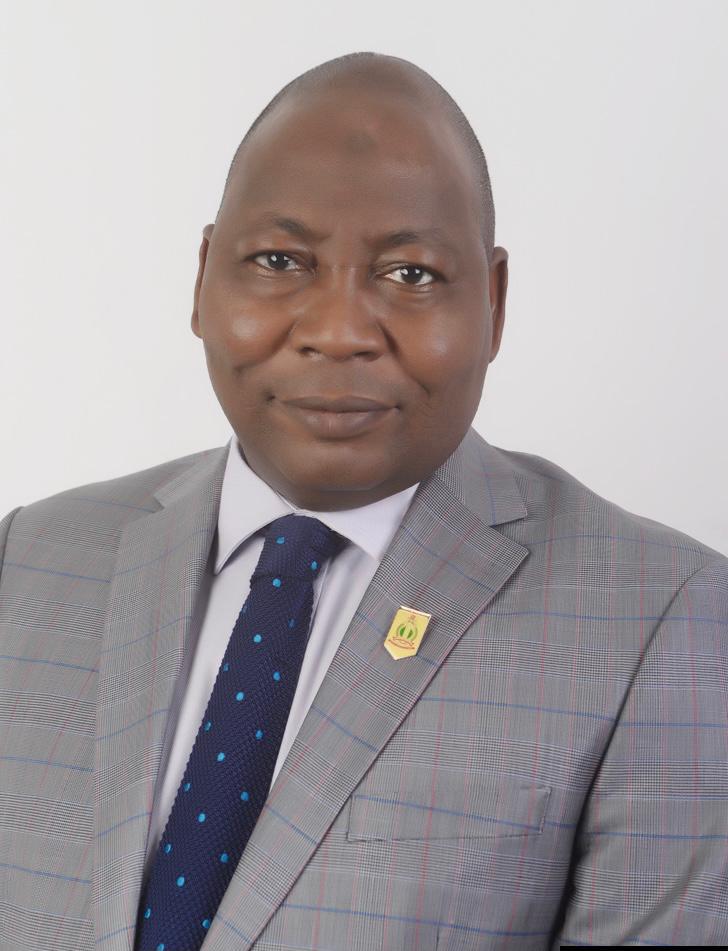
Brigadier General Sani Kukasheka Usman (rtd), mni fnipr, is a former Director of Army Public Relations and an expert in strategic communication and civil-military relations. He can be reached via @skusman on Instagram, Facebook, LinkedIn, X (Twitter) and YouTube.