From Abdullahi Shugaba, in Katsina
The Katsina State Executive Council has approved scholarship for 1700 students and series of strategic projects and policies aimed at strengthening the education sector, promoting digital governance, enhancing urban planning, and advancing climate resilient across the state.
These approvals were granted during the 5th Routine Meeting of the State Executive Council (SEC), for 2026, held at the Red Chamber of the General Muhammadu Buhari (GMB), Government House, Katsina, presided over by the Katsina State Governor, Malam Dikko Umaru Radda.
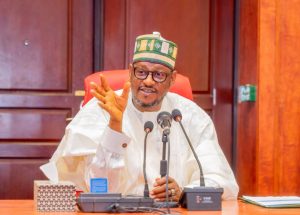
Briefing journalists after the meeting, the Commissioner for Ministry of Basic and Secondary Education (MBASE), Katsina State, Hon. Yusuf Suleiman Jibia, said the Council deliberated on several memoranda and approved key decisions aimed at improving service delivery, expanding access to education, and modernizing governance in the state.
He explained that the Council has approved the sponsorship of best 50 students from each of the 34 Local Government Areas of the state who excelled in the NECO or WAEC examinations, bringing the total number of beneficiaries to 1,700 students.
According to him, the scholarship programme will enable the beneficiaries to pursue courses in Nursing and Health Sciences, Engineering and ICT, Agricultural Sciences, as well as Education in state-owned Colleges of Education, Colleges of Health Sciences, and Polytechnics.
He noted that the scholarship is aimed at assisting talented and hardworking students from across the 34 Local Government Areas to access higher education in the state-owned institutions and contribute meaningfully to the development of Katsina State.
The Commissioner also announced that the Council has approved the procurement of 3,000 electric motorcycles to be distributed at subsidized rates to teachers posted to hard-to-reach rural areas across the state.
Hon Jibia said that the initiative is designed to ease transportation challenges faced by teachers, improve punctuality, and enhance service delivery in the education sector.stresding that the gesture is aimed at supporting their teachers who made sacrifices in difficult terrains.
“By easing their mobility challenges, we expect quality service delivery,improved punctuality, more commitment, and better learning output in our students.
Also speaking, the Special Adviser on Health Institutions, Alhaji Umar Mammada, revealed that the Council has approved the establishment of a Computer-Based Test (CBT) Centre at the Katsina State College of Nursing Sciences, Katsina, in view of the increasing reliance on CBT by regulatory and professional bodies in the health education sector.
Mammada explained that the approval was aimed at addressing the challenges faced by students who currently depend on private CBT facilities outside the institution to sit for qualifying examinations.
“The establishment of the CBT Centre will provide a conducive and standardized examination environment for our students, reduce costs, and enhance the overall academic experience within the institution,”
The Commissioner for MBASE, Hon. Jibia, also revealed that the Council approved the execution of the Katsina State Digital Mapping System for the integration of Development Control, Planning Permits, and Land Titling.
According to h,lm, the implementation of the system is expected to integrate technology into physical planning processes, promote transparency, and facilitate the orderly expansion and development of urban centres across the state.
“The digital mapping system will strengthen development control mechanisms, accelerate planning approvals, and ensure proper land documentation, thereby supporting sustainable urban growth,” he added”.
The Special Adviser on Climate Change, Prof. Al-Amin Mohammed, disclosed that the Council adopted the Katsina State Climate Change Policy and Plan of Action (2025–2030) as the official Climate Governance Framework for the state.
He explained that the policy includes the integration of climate-responsive budget codes and monitoring indicators across Ministries, Departments, and Agencies (MDAs) to strengthen transparency, accountability, and performance tracking.
“The adoption of this policy provides a structured framework for climate action in Katsina State and ensures that environmental sustainability is mainstreamed into government planning and budgeting processes,” he emphasized.
The Council reaffirmed that all decisions taken were in line with Governor Radda’s vision of inclusive governance in educational advancement, digital transformation, environmental sustainability, and improved service delivery for the people of Katsina State.