From Femi Mustapha, in Kaduna
Kaduna State has hosted a high-level monitoring meeting of the Reaching Out-of-School Children (ROOSC) Project, with the Federal Government and global partners reaffirming their commitment to return 100,000 out-of-school children to classrooms within the project’s four-year lifespan.
Kaduna State Commissioner for Education, Professor Abubakar Sani Sambo, said Governor Uba Sani is passionate about tackling the state’s out-of-school challenge through the ROOSC Project. He spoke while commending development partners supporting the initiative, specifically lauding the Global Partnership for Education (GPE), Kuwait Fund, Islamic Development Bank (IsDB), Education Above All (EAA), Save the Children, and UNICEF for advancing access to quality education in the state.
Prof. Sambo noted that the ROOSC Project aligns with Governor Uba Sani’s commitment to human capital development and his drive to ensure every child of school age in Kaduna State is enrolled, retained, and learning. He stressed that partnerships with global institutions remain critical to closing the state’s education gap and said the Ministry will continue to collaborate with partners to scale up interventions, improve infrastructure, and strengthen teacher capacity.
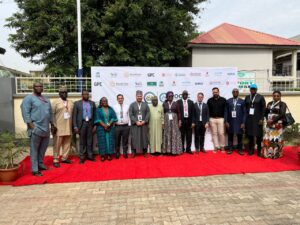
The Commissioner reiterated the state government’s resolve to reduce the number of out-of-school children and urged stakeholders at the community and LGA levels to support enrolment drives and monitoring for effective implementation. He stated this at the ROOSC Project Monitoring meeting held in Kaduna.
Delivering remarks on behalf of the Federal Government, Dr. Mrs. Folake Olatunji-David, Director of Basic Education in the Federal Ministry of Education, conveyed greetings from the Minister of Education, Dr. Tunji Alausa; the Minister of State, Professor Tahir Mamman; and the Permanent Secretary, Mr. Andrew David Adejo. She said she was serving in two capacities: as a Nigerian civil servant and as the Nigerian GPE focal point.
Dr. Olatunji-David described the gathering as a critical joint mission of GPE, the Islamic Development Bank, and other partners. She said the Federal Government remains committed to ensuring that no child in Nigeria is left behind in accessing quality, basic, and inclusive education, noting that education is one of President Bola Ahmed Tinubu’s key priorities.
She referenced the NEXT Agenda of the Federal Ministry of Education and the Nigerian Education Sector Renewal Initiative, both of which prioritize the issue of out-of-school children. She pointed to existing structures such as the National Commission for Almajiri and Out-of-School Children Education and the Universal Basic Education Commission, which is mandated to ensure all children are in school. The ROOSC project, she added, is Nigeria’s first multiplier project with GPE, designed to drive the strategic multi-stakeholder collaboration needed to tackle an issue becoming endemic nationwide.
Recalling GPE’s first project in Nigeria, the Nigeria Partnership for Education Project, which was flagged off in 2015 across Kaduna, Kano, Jigawa, Katsina, and Sokoto. She noted that many achievements were recorded in Kaduna State. However, she stressed that the out-of-school problem persists because, as one set is cleared, others emerge.
“We have to really tackle this issue at the root,” she said, adding that the success of ROOSC will prove the multi-sector multiplier model can work in Nigeria.
Commending Kaduna’s leadership under the Commissioner, she also appreciated development partners, GPE and IsDB, for funding education in Nigeria, and the Qatar Foundation’s Education Above All for its technical expertise and resources. Speaking on behalf of IsDB, Jawara Gaye said the bank is not proud of the education systems in most member countries, particularly in terms of access and learning proficiency, with Nigeria and Pakistan having the highest numbers of out-of-school children.
Gaye described the ROOSC project as central to IsDB’s efforts to support governments on these perennial challenges. While acknowledging the complexity of aligning financing partners—EAA, the Kuwait Fund, IsDB, and GPE—he thanked implementing partners UNICEF and Save the Children. He assured that challenges raised would be frankly discussed to find collective solutions, stressing, “We are not here to fail. We’re here to succeed.”
Representing GPE, Dorian Gay said the partnership supports countries in transforming education systems, improving learning outcomes and access, and fostering equity for the most vulnerable, including girls, children with disabilities, and those in hard-to-reach areas.
He emphasized that ROOSC reflects GPE’s focus on reaching the most marginalized amid insecurity and fragility, and that the joint supervision is about ensuring reforms truly reach vulnerable children and strengthen Kaduna’s system long term.
Jane Mbagi Mutua, Deputy Country Director and Director of Program Development, Impact and Influencing at Save the Children Nigeria, said education is a form of protection.
“By ensuring that children are accessing school, we are also making sure they are protected and can become who they want to be,” she said. She described the review mission as a chance to assess achievements, challenges, and strategies to meet set targets.
Project Coordinator for ROOSC in Kaduna State, Ezra Angai, said the 2026 Joint Supervision Mission marks the project’s second year.
The meeting hosted partners from GPE, Kuwait Fund, IsDB, EAA, Save the Children, and UNICEF, as well as delegations from the Federal Ministry of Education and the International Economic Relations Department. The mission aims to review progress, identify issues, and jointly proffer solutions so Kaduna children can access lifelong learning.
Angai noted that while inflation and foreign exchange fluctuations have affected cost projections, partners remain committed to returning 100,000 children to school within four years. Balad Ada of UNICEF described the meeting as one of the most important steps the state and federal governments can take for basic education.
He said the review will help stakeholders learn from what has worked and take steps to ensure children in Kaduna State enjoy their right to education.