
From Edirin Robinson, in Kaduna
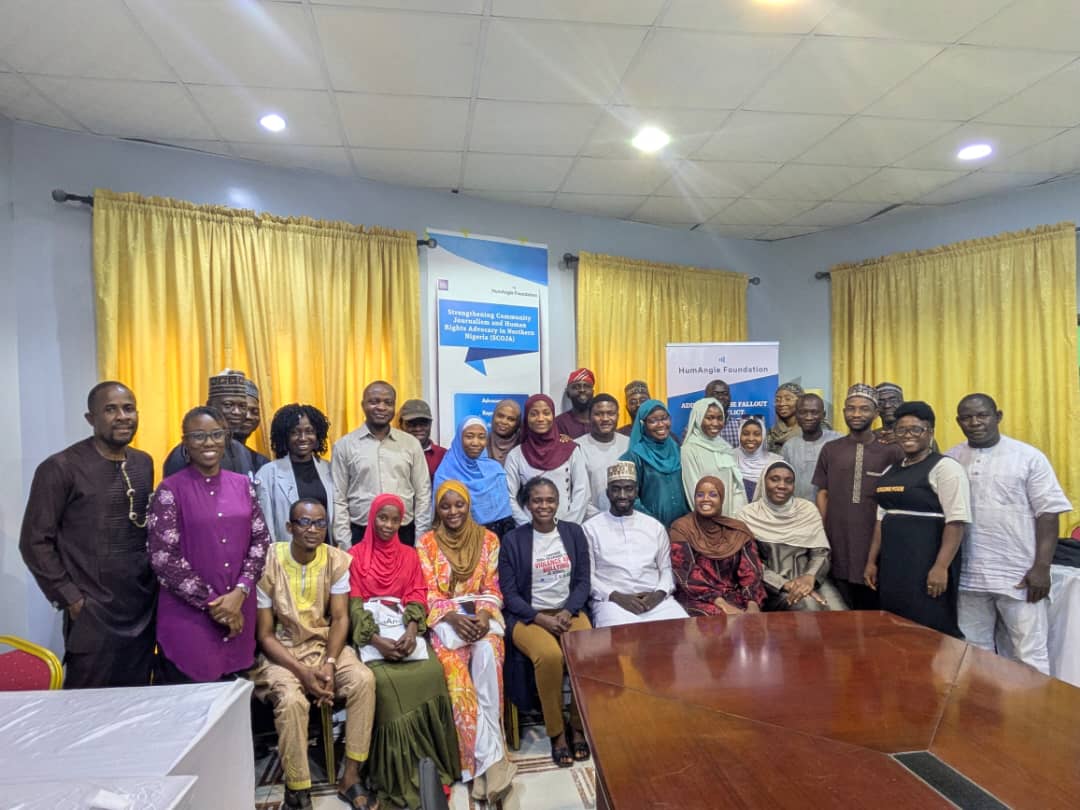
In a collaborative effort to address the consequences of conflict and tackle humanitarian and development issues in Northern Nigeria, the HumAngle Foundation, with support from the Netherlands Embassy, has organized a three-day capacity-building training for community journalists and advocates.
The initiative, titled “Strengthening Community Journalism and Human Rights Advocacy in Northern Region” (#SCOJA) fellowship, aims to improve the quality of local reporting and advocacy.
The training was held at various locations in Kaduna, Borno, and Plateau States, focusing on four critical thematic areas: Human Rights, Climate Change, Sexual and Gender-Based Violence (SGBV), and Accountability.
During her address to the participants, the Director of the Foundation, Angela Umoru David, explained that the goal is for fellows to leverage the mentorship and support received to amplify local voices in their communities.
“We know that the thematic areas highlighted are some of the most pressing issues in Northern Nigeria, which is why this training is vital at this time.
“While we expect the fellows to create their own deliverables, we want this to go beyond just writing reports. We want the lessons they’ve learned—such as trauma-sensitive reporting, conflict mapping, conflict analysis, and solutions journalism—to be institutionalized in their respective organizations.”
She emphasized that focusing on community journalists is crucial because they are closer to the grassroots, have a better understanding of local issues, and are better positioned to drive solutions. She hopes this will significantly improve the quality of journalism practiced in the region over the long term.
Salihu Maimunat, a journalist from Prestige FM in Niger State, shared that the training reshaped her perspective on journalism and equipped her with new skills for enhanced reporting.
“When it comes to journalism, especially in my region, people often say anyone can be a journalist. But after attending this training, I realized there’s so much more to it.
“I learned that as a journalist, my role goes beyond just writing; we can follow up, advocate, and be part of the change in our communities by lending our voices.”
Maimunat pledged to become a trailblazer by applying the lessons she learned in her work, changing patterns, and breaking stereotypes to show others that there is more to journalism than meets the eye.
Similarly, Ango Bala, a reporter at Invicta FM in Kaduna, expressed that the training was engaging, educational, and revealing, fueling his interest in solutions journalism.
“I have learned new things, networked, and collaborated with new people. I believe that by the end of this six-month fellowship, my skills will significantly improve in areas such as reporting and analysis.
“Another significant aspect was conflict reporting. As journalists, we often find ourselves in the shoes of the individuals in our stories and can become overwhelmed with emotions, which may lead to bias and exacerbate the crisis. However, this training has enlightened me on how to manage my emotions and stay focused when reporting on conflict-related issues.”
Bala looks forward to conducting a follow-up training with his colleagues to share his knowledge and help others improve the quality of journalism. He stressed the importance of journalists identifying pressing societal issues, addressing them, and proposing solutions.