
From Femi Mustapha, in Kaduna
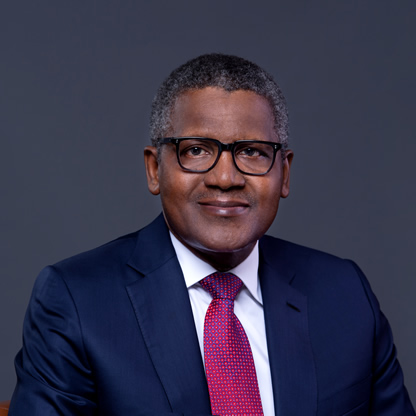
Alhaji Aliko Dangote, President of the Dangote Group, has warned that the North’s sluggish economic growth and escalating insecurity are due to decades of inconsistent government policies and persistent electricity shortages.
Speaking at the Arewa Consultative Forum (ACF) Silver Jubilee Dinner and Award Night in Kaduna, Dangote stated that the region is on the brink of a more profound crisis unless its leaders urgently redefine its development trajectory.
He explained that past attempts to industrialize the North failed mainly because of abrupt shifts in government policies that undermined long-term investments and eroded investor confidence.
“Historical efforts to industrialize the North collapsed largely due to abrupt changes in government policies that frustrated long-term investments and drained investor confidence,” he told the audience.
Dangote shared that his group had once commissioned Arthur Andersen—now part of KPMG—to investigate why several promising northern industrialists, including leading textile operators, failed despite their talent and initial success.
The consultancy’s findings, he noted, pointed directly to unstable government policies. “Imagine you are about to score a goal and someone suddenly tells you the goalpost is behind your back.
That is how unpredictable government policy has been,” he explained, emphasizing that such uncertainty undermined multiple northern industries that could have driven economic growth.
He identified the second major challenge as the ongoing lack of reliable electricity. The Dangote Group intentionally avoids connecting any of its Nigerian plants to the national grid due to its unreliability and insufficiency for industrial-scale operations.
“The only two countries where we connect to public power are South Africa and Ethiopia. Without electricity, you cannot achieve growth, no matter how hard you try,” Dangote warned, noting that power shortages remain one of the biggest obstacles to reviving northern manufacturing.
Furthermore, Dangote explained that industrialization has become even more difficult due to rising interest rates and the high cost of capital.
He remarked that manufacturing in Nigeria is nearly impossible without significant personal financing, which further limits the entry of new industrial players.
He urged northern political leaders to develop a coherent, long-term economic framework anchored in three pillars: education, industry, and agriculture, aligning this framework with the transformation blueprint previously articulated by former Vice President Atiku Abubakar.
Dangote also highlighted the region’s untapped agricultural potential, stating that the North possesses both the land and population to become the food hub of West Africa.
However, this potential is far from being realized due to inadequate planning and a lack of sustained investment in the agricultural sector.
He cautioned that the current insecurity—manifested in banditry, youth unemployment, and economic displacement—is a direct consequence of years of neglect in crucial sectors.
“All the challenges we are facing today would not exist if we had made the right decisions. We all share the blame, myself included,” he said.
The business mogul emphasized that the region must prioritize industrial growth if it hopes to combat insecurity and create jobs, urging leaders across political and economic lines to tackle the region’s challenges collectively.
Dangote noted that while the ACF’s 25th anniversary is worth celebrating, it should also serve as a sober reminder that the North stands at a crossroads. He called upon northern leaders to unite urgently to chart a new course that ensures economic survival and long-term security.
He concluded with a stark warning: “If we don’t address these issues, they will consume every one of us, whether we are guilty or not.”