
“The road is made for human beings.”
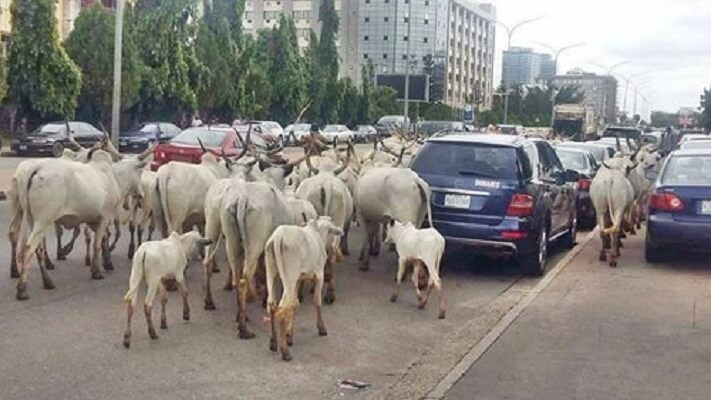
A motorist in Abuja shouted at a Fulani herder whose cattle had occupied part of a busy road within the Federal Capital Territory. The herder calmly responded:
“This is your car, is it a human being?”
The exchange, captured in a now viral video, has generated outrage, laughter and condemnation in equal measure. To many city residents, it was another disturbing reminder of the growing presence of cattle within the Abuja metropolis. To others, it reflected what they see as stubborn resistance by pastoralists to modern urban order.
But beyond the emotions and social media mockery, the conversation revealed something deeper and more troubling about the crisis of insecurity and displacement unfolding quietly across the FCT.
The problem of cattle within Abuja city is not simply about indiscipline or the refusal of herders to obey urban regulations. It is also a consequence of the collapse of security within forests, grazing corridors and rural settlements surrounding the capital city.
Another statement by the herder in the same video deserves closer attention:
“Fulani man… we only follow grass.”
That short sentence captures the historical reality of pastoral life across West Africa. For centuries, pastoralists survived by moving seasonally in search of pasture and water. Their movement followed ecological patterns, not political boundaries. They traditionally avoided dense urban settlements because cities offered neither grass nor safety for livestock.
So why are cows now increasingly visible within Abuja city?
The answer lies partly in the frightening transformation of the forests and rural outskirts of the FCT into dangerous territories controlled or infiltrated by bandits, kidnappers and criminal gangs.
Large portions of forested areas around Bwari, Kuje, Abaji, Kwali and even areas bordering Niger, Kaduna and Nasarawa states have become high-risk zones. Communities have repeatedly suffered kidnappings, attacks and extortion. Farmers fear going to farms while herders fear moving deep into forests where armed gangs operate freely.
In another revealing statement from the viral video, the herder said:
“Get rid of bandits from the bush and Fulani will return to the bush.”
That statement may sound simplistic, but it contains an uncomfortable truth. Many pastoralists who once avoided urban areas are now moving closer to populated centres because insecurity has made traditional grazing routes unsafe.
This does not excuse the dangers associated with cattle roaming within a modern city. Abuja residents are justified in worrying about traffic obstruction, sanitation problems and public safety. A capital city cannot function efficiently if highways become grazing routes.
However, policy responses driven purely by anger or symbolism will not solve the problem.
The Minister of the FCT, Nyesom Wike, has repeatedly expressed frustration over roaming cattle within Abuja. His administration has focused heavily on restoring urban order, demolishing illegal structures and modernising the city’s appearance.
Yet the cattle issue cannot be solved merely through threats, arrests or media outrage. Abuja’s cattle problem is rooted in a larger rural security collapse.
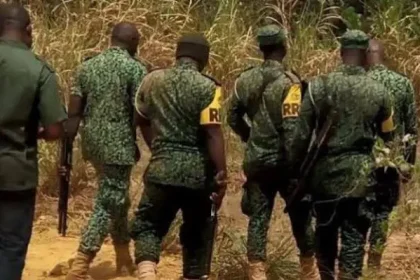
The forests surrounding the FCT have become theatres of criminal activity. Armed groups exploit difficult terrain, weak surveillance and poor policing presence. Villages that once supported farming and pastoral livelihoods now live under constant fear. Many herders reportedly pay illegal levies to armed groups before accessing grazing areas. Others lose cattle to rustlers or kidnappers.
In such an environment, some pastoralists calculate that the risks of entering the city are lower than the risks of remaining in isolated forests.
Another controversial statement from the herder also deserves examination:
“It is you people causing banditry. Fulani man has no money and guns.”
Many Nigerians may strongly disagree with this claim, especially given the widespread accusations linking some criminal groups to Fulani militias or armed herders. Indeed, criminality exists across all communities and ethnic groups, and no group should be collectively absolved from accountability.
However, the statement also reflects the deep feeling of collective stigmatization among ordinary pastoralists. Many poor herders argue that they themselves are victims of banditry, cattle rustling and rural violence. They insist that sophisticated weapons and organised criminal networks are beyond the reach of the average nomadic family struggling merely to survive.
This is where the Nigerian state must avoid simplistic narratives.
Not every herder is a bandit. Not every pastoral settlement is a criminal camp. Equally, criminal elements hiding under pastoral identities must not be tolerated. The challenge requires intelligence-driven policing rather than blanket ethnic profiling.
The Abuja cattle debate therefore exposes a major contradiction in Nigeria’s security strategy. Government often focuses on visible urban symptoms while neglecting the invisible rural causes.
A city free of roaming cattle will not emerge simply because officials issue directives from air-conditioned offices. It will emerge when rural grazing zones become safe, when forests are reclaimed from criminals and when pastoral communities regain confidence to operate away from city centres.
The FCT administration must therefore complement urban enforcement with aggressive rural security measures. Forest surveillance should be strengthened. Grazing corridors and rural settlements must be secured. Security agencies should dismantle kidnapping camps operating around the territory. Technology-driven monitoring, including drones and community intelligence networks, should become part of the strategy.
At the same time, Nigeria must accelerate long-delayed livestock reforms. Ranching, modern grazing reserves, water infrastructure and livestock value chains can reduce uncontrolled movement over time. But such reforms require trust, inclusion and economic support rather than political hostility.
The viral Abuja video may appear amusing on the surface, but it exposes a serious national dilemma. When herders no longer feel safe in forests and bushes, they drift toward highways and cities. When the countryside becomes lawless, urban centres inevitably inherit the crisis.
Abuja’s cows are therefore not merely an urban planning problem. They are warning signs of a deeper security failure unfolding beyond the city lights.
Until Nigeria secures its forests and restores confidence in rural life, the roads of Abuja may continue hosting both cars and cattle in an uneasy coexistence.
Toro is a Director strategic planning with MACBAN headquarters Abuja