From Femi Mustapha, in Kaduna
The AGILE Alternative Education Programme, a collaborative initiative between the World Bank and the Kaduna State Government, is making significant strides in addressing the barriers that girls face in accessing education due to cultural, social, and religious factors.
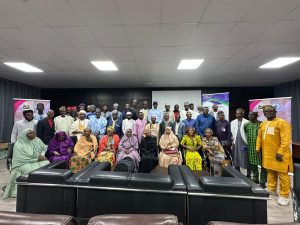
Mallam Nasiru Aminu from Hope for Communities and Children (H4CC) reported these achievements during a second-chance programme organized by H4CC for traditional rulers, religious leaders, and media representatives in Kaduna.
He reported that the project implemented by H4CC has seen remarkable success in its first year, particularly in enrolling and supporting adolescent girls across ten local government areas.
The program has successfully enrolled 37,053 adolescent girls and mothers, providing them with access to basic literacy and numeracy classes.
Currently, approximately 3,500 beneficiaries are participating in these classes, supported by 78 trained mentors who facilitate the activities. The program has established 72 centers for literacy, numeracy, and life skills, benefiting a total of 3,446 participants.
Mallam Aminu noted that continuous assessments at the end of the first term indicated that 71% of participants passed both numeracy and literacy.
Despite these achievements, Mallam Aminu pointed out that the program faces several challenges, including:
Cultural and Social Barriers: Some fathers, husbands, and guardians hinder enrolled beneficiaries from accessing basic literacy and numeracy education, insisting they focus instead on livelihood skills. To address this, the program is engaging religious and community leaders to sustain support for the Alternative Education/Second Chance Program.
Inadequate Infrastructure Some centers lack sufficient seating and have dilapidated structures. The program has coordinated with relevant departmental heads to secure additional classes and select safe, accessible centers.
Looking ahead, Mallam Aminu emphasized the need for the program to explore strategies for mobilizing resources to support beneficiaries with learning materials and to provide mentors with teaching resources for literacy and numeracy.
He also outlined plans to develop a rigorous monitoring framework to ensure that regular sessions align with established guidelines and to expand to nine additional local government areas. This expansion is set to commence in September, further extending the program’s reach and impact.
According to Mallam Aminu, the AGILE Alternative Education Program represents a beacon of hope for girls’ education in Kaduna State, with its success serving as a model for similar initiatives focused on promoting education and empowerment for adolescent girls.
In her remarks, Hadiza Umar, the team lead of H4CC, stated that Kaduna State’s Second Chance Policy has raised awareness in communities and engaged traditional and religious leaders about the necessity for dropout married girls to return to school. She emphasized the importance of churches and mosques in encouraging girls interested in resuming their education to join the program.
“We also engage husbands to demonstrate the significance of education for their wives and families,” she explained. “While some husbands agree, others do not. Some adolescent girls who dropped out to marry may eventually get divorced. Others may lose their husbands and seek to return to school, while some who left due to medical challenges may also wish to resume their education.”
She concluded by stating that H4CC, in collaboration with other stakeholders, plans to scale up the program to additional local government areas.