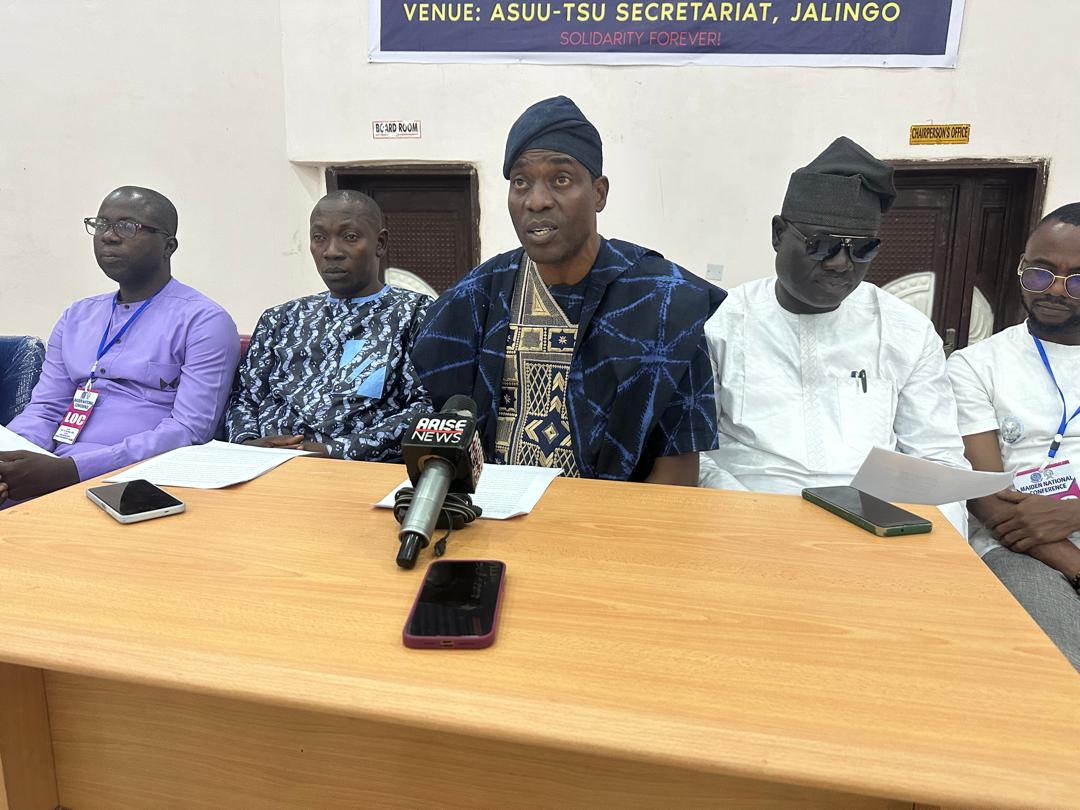

By Godwin Agia, in Jalingo
Stakeholders at a national conference on violent conflict and peacebuilding in Taraba State have stressed the need for inclusive engagement of all concerned to address the root causes of conflicts.
This was contained in a communique signed by Dr. Buhari Shehu Miapyen, Chairman and Dr. Nsemba Edward Lenshie Secretary released after a three day meeting, organized by the Department of Peace Studies and Conflict Resolution,Taraba State University in collaboration with the Bureau for Peace and Conflict Management on Thursday in Jalingo.
Citizenship Daily reports that a diverse gathering of academics, policymakers, traditional rulers, security agencies, civil society organizations, youth and women groups, religious leaders, community representatives, and international partners were in attendance.
It noted that the stakeholders have identified competition over land, water, and grazing resources, ethnic mistrust, and weak governance as key drivers of violence in the country.
The communique localized clashes between farmer-herder conflicts have increased, with climate change and environmental pressures exacerbating resource competition.
“The conference noted disturbing trends in the evolution of violent conflicts across the state. Localized clashes, attacks, and reprisal incidents have become more frequent in various Local Government Areas, and farmer–herder conflicts have grown increasingly complex, often involving more sophisticated weaponry. Rising incidents of banditry, kidnapping, and insecurity along highways have introduced new layers of instability.
“Stakeholders expressed concern about the rise of misinformation and inflammatory content on social media, especially during politically sensitive periods. Additionally, climate-related disruptions such as drought, flooding, and unpredictable rainfall patterns are intensifying resource-related conflicts.
The consequences of these conflicts have been far-reaching.
“Communities continue to suffer loss of lives, destruction of homes and farmlands, and mass displacement. Agriculture, the backbone of the state’s economy, has been severely affected, with impacts on food security and livelihoods. Schools, health centres, and other essential services in conflict-prone areas have faced repeated disruptions. Economic losses have mounted due to the destruction of infrastructure, reduced investment activities, and increased security expenditures.
“The psychological impact of violence, including trauma, fear, and prolonged distress, remains prevalent, particularly among vulnerable groups such as women and children. Moreover, the erosion of trust among communities has deepened social fragmentation and weakened inter-group cooperation.
“Despite these challenges, the conference acknowledged ongoing Peacebuilding efforts across the state. Participants commended the Taraba State Government for its continued role in promoting security and peace initiatives, particularly through the Bureau for Peace and Conflict Management and collaborative interventions with traditional rulers, security agencies, and community actors.
“However, they emphasized that more concerted and strategic efforts are needed to address persistent conflict flashpoints, especially in areas such as Karim Lamido, Donga, Takum and Wukari Local Government Areas, where tensions and violent incidents have continued to threaten community stability.
“The Taraba State Government, through the Bureau for Peace and Conflict Management, has established mediation and dialogue mechanisms to address emerging conflicts. Traditional and religious leaders continue to play instrumental roles in resolving disputes and fostering reconciliation.
“Civil society organizations and academic institutions, including Taraba State University, have advanced peace education, research, advocacy, and capacity-building initiatives. Security agencies have increased surveillance and intervention efforts in identified flashpoints,” communique read.