From Garba Abdullahi Bagwai, in Kano
The Chairman of the Kano State Multi-Agency Taskforce on Drug Abuse and Illicit Trafficking, Muhuyi Magaji Rimingado has accused the Pharmaceutical Council of Nigeria (PCN) of allegedly protecting drug dealers and facilitating the distribution of illicit substances in the state.
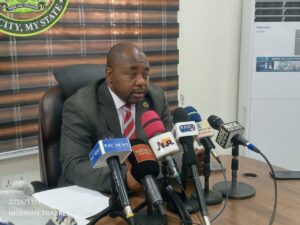
Rimingado made the allegation while addressing journalists in Kano on Saturday, expressing concern over what he described as the involvement of some public officials in activities undermining the state government’s efforts to combat drug abuse and illicit trafficking.
He said the fight against drug abuse had reached a critical stage, requiring decisive action against individuals and institutions allegedly using their official positions to facilitate illegal drug distribution.
According to him, the task force would no longer concentrate solely on arresting drug users while those allegedly responsible for supplying the substances continued to operate under the protection of regulatory authorities.
Rimingado identified pregabalin and other controlled substances as some of the most widely abused drugs in Kano, urging regulatory agencies to discharge their responsibilities with patriotism, professionalism and fear of Allah.
He argued that effective performance by regulatory institutions would reduce the need for the state government to establish additional mechanisms to tackle the growing menace of drug abuse.
The chairman disclosed that the task force had recorded 1,760 arrests since the commencement of its operations, resulting in the conviction of 890 suspects for various drug-related offences.
He added that 63 suspects were awaiting trial, while approximately 690 convicted persons were being held in different correctional facilities.
Other offenders, he said, had been referred for rehabilitation, fined or sentenced to community service.
Rimingado described the figures as evidence of the task force’s efforts to reduce drug demand, disrupt supply networks and tackle thuggery across the state.
He maintained that drug abuse was closely linked to the activities of street gangs and thugs, stressing that addressing the supply chain was essential to achieving sustainable results.
The chairman, however, said the task force could not continue arresting drug users without confronting those allegedly responsible for supplying the substances.
He specifically accused some regulatory officials of shielding drug dealers despite their statutory responsibility to prevent unauthorised access to controlled pharmaceutical products.
Rimingado recalled the recent seizure of 3.18 million pregabalin capsules by the task force, describing it as an indication of the scale of illegal drug distribution in Kano.
According to him, eight out of every 10 suspected drug users arrested in the state were either found with pregabalin or admitted to abusing the substance.
He also questioned the circumstances surrounding the issuance of import licences to pharmaceutical companies dealing in pregabalin, particularly following its rescheduling as a controlled drug by the National Agency for Food and Drug Administration and Control (NAFDAC) on September 14, 2026.
He questioned the regulatory information used in granting import licences to several companies, alleging that some businesses had exploited the privileges to facilitate the distribution of controlled substances.
Citing findings from preliminary investigations, Rimingado alleged that an import licence granted to UGO Lab Production Nigeria Limited on October 23, 2026, was linked to a wider network of companies allegedly involved in the unlawful distribution of pregabalin.
He further claimed that the owner of the company had established another firm, SEEMARK Pharmaceutical Nigeria Limited, which he alleged was created as a front for clandestine drug distribution.
The task force chairman also accused the PCN of facilitating the alleged activities by registering a property at No. 10 Apple Avenue, which he described as a residential location, for pharmaceutical operations.
He alleged that the property was being used as a concealed distribution outlet for pregabalin, providing a channel through which the substance found its way into the streets of Kano.
Rimingado argued that registering a residential property for such activities raised serious questions about compliance with relevant laws, including the Land Use Act, as well as the regulatory procedures followed by the council.
He said the alleged actions had undermined the objectives of the Controlled Wholesale Chain (CWC), which he noted was being advocated by the regulatory institution itself.
The chairman challenged the relevant authorities to explain how pregabalin had become widely available on the streets of Kano despite its controlled status, insisting that the substance was rarely found in conventional pharmaceutical outlets across the state.
He maintained that its widespread availability outside recognised pharmaceutical channels could not be dismissed as accidental, suggesting possible weaknesses or deliberate compromises within the regulatory system.
Rimingado further alleged that some PCN staff members were involved in clandestine pharmaceutical businesses, claiming that this explained what he described as the council’s excessive protection of its regulatory jurisdiction.
He expressed concern over the council’s insistence on exclusive authority to seal premises, even when other government agencies uncovered suspected violations.
According to him, the PCN has fewer than 20 staff members in Kano State but continues to insist that it alone has the authority to seal premises suspected of violating pharmaceutical regulations.
He described the position as counterproductive, particularly when the state government’s multi-agency task force was working to address a public health and security challenge affecting thousands of residents.
The chairman stressed that the statutory responsibilities of federal regulatory agencies should not be interpreted as immunity from lawful oversight, inter-agency collaboration or accountability.
He warned that public officials who acted contrary to the law could face criminal liability, adding that the task force was prepared to deploy all necessary legal measures to address any established misconduct.
Rimingado reaffirmed the task force’s commitment to pursuing drug dealers, dismantling distribution networks and ensuring that individuals or institutions found to be contributing to the drug abuse crisis were held accountable.
He called for collective responsibility among government institutions, insisting that regulatory agencies must demonstrate transparency, integrity and commitment to enable Kano State to make meaningful progress in the fight against drug abuse.