
The world all over has become increasingly prone to disasters; some natural and a number of them human-induced. In Nigeria, flooding is a recurring problem over the past decades and has since then, been responsible for significant infrastructural damages, economic losses, displacement of population and impoverishing of affected victims. These are outside the direct and indirect effects on national food security.
Unlike some other natural disasters, flooding can be proactively managed, reduced or totally mitigated. This is because most of the time, incidences of flooding are direct consequences of human actions and inactions. Without mincing words, the recurring and devastating flooding are greatly exacerbated by our flawed human interactions; continuous engagement in practices that make us prone to disasters and failure to engineer sustainable solutions to the flooding challenges.
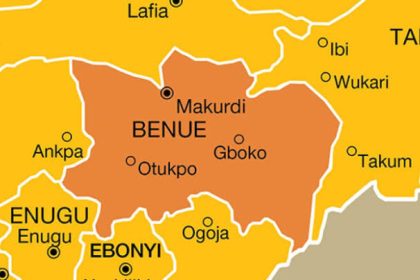
Historically, the country, Nigeria has a long history of flood disaster, with pluvial, fluvial and coastal floods seriously impacting communities in both rural and urban settlements. We have a numbers that are prone to flooding along their plains. The River Niger, Benue and Hadeja are examples of these rivers. Recent years have seen increased frequencies and severity of flooding in the country. In 2022 and 2024, states across the country experienced devastating floods, linked to heavy rainfall, dams’ releases, especially from neighboring countries and climatic change factors such as increasing water temperature and surface temperature.
In 2012, we experienced one of the most affective and destructive flood that affected 36 states and led to gross damages and displacement of millions of Nigerians. In 2022, the severe flooding that displaced 1.2 million victims affected 34 states of the federation. In September 2024, flooding in part of Borno state, submerged almost the whole of a city, killing over 36 people and displaced about 500 thousand residents.
The same 2024, in November, most of the riverine areas of the south-south and south-east states of Nigeria were hugely put at risk as a result of increased from both River Niger and River Benue. Then in May 2025, in Mokwa, Niger state, the country witnessed mammoth displacement, deaths and properties damages due to flooding.
The question after all these avoidable disasters would be, one, what have we failed to do that continue to make us vulnerable to these recurring floods? Secondly, what do we have to do, and do now to permanently, or to a large extent, address the flooding disaster in the country? Finally, who is to do what must be done; the government, the people or all of us?
We know that the ever preached climate change call on us to be prepared; yet, we continue to engage in poor urban planning, deficient and poor drainage systems, unregulated urban expansions and then very poor waste management system. At a time when across the country, supports for and call for forestation should be onboard, we are felling trees without replacing them; removing vegetations that reduce the soil water absorption capacity and increase water runoff.
In almost all the areas where we are most prone to flood, the lack of proper drainage system and flood defense are obvious. Building erected on flood ways are a common site; building codes and planning laws are strange to our operations.
Outside these direct failures, as a country, we are without effective flood modeling structure and flood vulnerability assessment program. These have continued to hinder the national capacity to respond to flood incidences. As a nation, we have paid and are still paying lip services to public education, understanding of flood risks and mitigation measures at all levels of governance. It appears as if we only wait for the next flooding and the cycle continues.
What do we have to do? Our seriousness to mitigate flooding in Nigeria must have to begin with a strong political will across all levels of governance in the country. From the federal to the local government administrations, the country must develop a comprehensive flood risks and response master plan, to dictate the country policies and responses to the disasters. This will contain a national integrated flooding management system. With these in place, the country must then put in place systems to conduct regular flooding modeling.
Yes, we have a warning system mechanism in place; but these should become more proactive, definitive and actions based. Beyond warnings, we should have systems that ensure compliances by targeted locations and communities. The role of the National emergence response agencies should be defined to include supervising the immediate removal of communities that are target of impending floods. For this to work, it is pertinent that our flood forecasting must be as accurate as it can be; it must be timely.
Beyond responses preparation, we must look at prevention systems. How do we stop the flooding from happening? What infrastructures do we have to put in place? The Federal Ministries of Works and the Environment counterpart, must work hand-in-hand to design a master plan for floods mitigation infrastructure for the country and set up a special department to actualize the infrastructure program. This should include effective construction of drainage in all places where they are needed, the clearance of water ways across the country of illegal structures, creation of alternative flood paths in times of dams opening or damages. This must also include the dredging of selected rivers across the country to crate strong reservoirs for water at time when the volume surge.
With all these, we should then move to the next step. The education of the citizens on the risks associated with unmitigated flooding must become an integral of our national education curriculum; as much as it is taken up by the National Orientation Agency, under the Ministry of Education, to enlighten the mass population of Nigeria. These education will natural call for and lead to community participations in the proactive prevention of flooding and responses in event of the disasters.
The climate change is real; we must accept it and adapt to the changes we cannot control. Our legislation and treaties to international responses must stop been on papers. We must begin to implement these treaties. If the climate is changes, we should engage in practices that will augment the changes rather. Tree planting; waste management, sustainable land use system and gradual reduction of burning of excessive carbon enrich fossil fuel, for the use of environmental friendly energy sources.
Finally, whose responsibility is it to respond to the national flooding menace? The job is for all of us. We all have roles to play; from the citizens who ensure compliance with basic rules to the government that implement systematic and result-yielding projects.
Professor Medaner is reachable via: info@medaner.com, justme4justice@yahoo.com