…Says inputs can be made at public hearings
By Obaike Ode-Ihue
President Bola Tinubu has said that the tax reform bills currently before the National Assembly must be allowed to undergo their full legislative processes.
The President made the declaration against the background of suggestions by the National Economic Council (NEC) that the bills be withdrawn to allow for more consultations with a view to reducing “misinformation and disinformation.”
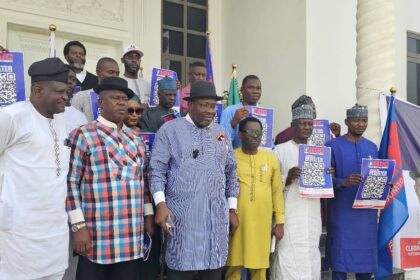
The call for the withdrawal of the bills by NEC was believed to have been informed by the opposition to the bills by the Northern States Governors Forum (NSGF) in its meeting Monday in Kaduna.
Reacting to the suggestion for withdrawal, President Tinubu, however, said the bills should rather be allowed to run their full legislative course.
Tinubu’s response was contained in a statement by his Special Adviser on Information and Strategy, Bayo Onanuga, on Friday.
According to the statement, rather than withdrawal, President Tinubu said those opposed to any aspects of the bills should seize the opportunity offered by the public hearings to air their decent.
“President Bola Tinubu has received the National Economic Council’s recommendation that the tax reform bills already sent to the National Assembly be withdrawn for further consultation.
“President Tinubu commends the National Economic Council members, especially Vice President Kashim Shettima and the 36 State Governors, for their advice.
“He believes that the legislative process, which has already begun, provides an opportunity for inputs and necessary changes without withdrawing the bills from the National Assembly.
“While urging the NEC to allow the process to take its full course, President Tinubu welcomes further consultations and engagement with key stakeholders to address any reservations about the bills while the National Assembly considers them for passage.
“When President Tinubu set up the Presidential Committee on Tax and Fiscal Policy Reform in August 2023, he had only one objective: to reposition the economy for better productivity and efficiency and make the operating environment for investment and businesses more conducive. This objective remains more critical even today than ever before.
“The Committee worked for over a year and received inputs from various segments of society across the geopolitical zones, including trade associations, professional bodies, different Ministries and Government Agencies, Governors, traders, students, business owners, and the organised private sector.”
The statement also noted that the tax reform bills that emerged were distilled from the extensive work of the Presidential Committee.
“The tax bills before the National Assembly aim to streamline Nigeria’s tax administration processes, completely overhaul the nation’s tax operations, and align them with global best practices,” it noted.”
The bills in contention includes “The Nigeria Tax Bill” which seeks to eliminate multiple taxation and make Nigeria’s economy more competitive by simplifying tax obligations for businesses and individuals nationwide; and “The Nigeria Tax Administration Bill (NTAB),” which proposes new rules governing the administration of all taxes in the country. Its objective is to harmonise tax administrative processes across federal, state and local jurisdictions to ease taxpayers’ compliance and enhance the revenue for all tiers of government.
Others are “The Nigeria Revenue Service (Establishment) Bill;” seeking to re-establish the Federal Inland Revenue Service (FIRS) as the Nigeria Revenue Service (NRS) to better reflect its mandate as the revenue agency for the entire federation, not just the Federal Government; and
“The Joint Revenue Board Establishment Bill: proposing creating a Joint Revenue Board to replace the Joint Tax Board, covering federal and all state tax authorities. The fourth bill will also establish the Office of Tax Ombudsman under the Joint Revenue Board, protecting taxpayers’ interests and facilitating dispute resolution.”
Onanuga, in the statement said “The bills’ overarching objective is to effectively coordinate federal, state, and local tax authorities, thereby eliminating the overlapping responsibilities, confusion, and inefficiency that have plagued tax administration in Nigeria for decades.”