In a world fracturing along economic faultlines, Chinese President Xi Jinping offered a clear compass. “Countries cannot thrive without an international environment of open cooperation, and no country can afford to retreat into self-imposed isolation,” he reminded global audiences.
The 2026 World Economic Forum (WEF) Annual Meeting opened on Monday in the snowy Swiss resort of Davos. As global leaders reconvene in the Alpine town, the world economy is grappling with a familiar yet intensifying set of challenges, most notably a surge in protectionism, unilateralism and hegemonism.
Against this backdrop, the vision articulated by Chinese President Xi Jinping in multiple past speeches stands out, offering a clear and consistent compass for global economic governance, one that underscores openness and justice as fundamental anchors for stability and growth.
Translating that vision into concrete actions, China has stepped up development-oriented cooperation with other Global South countries, aligning with their shared concerns amid rising uncertainties and reinforcing calls for a more inclusive and predictable world economic order.
UNILATERALISM EXACTS HEAVY TOLL
Indeed, global economic growth faces significant headwinds as escalating unilateralism and protectionist measures dampen international trade and investment flows. Indermit Gill, the World Bank Group’s chief economist, warned that the world economy is set to grow more slowly in the coming years than it did even in the troubled 1990s.
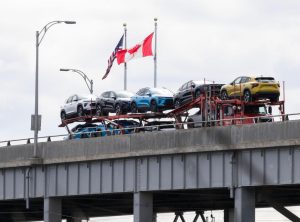
A significant factor behind this slowdown is a new round of tariffs and trade restrictions rolled out by Washington over the past year. As these measures accumulated, the average U.S. import tariff surged from 2.4 percent in early 2025 to nearly 18 percent — the highest level since the 1930s.

Such arbitrary tariffs are exacting a heavy toll. According to the United Nations Conference on Trade and Development (UNCTAD), U.S. growth is expected to slow to 1.8 percent in 2025 and 1.5 percent in 2026, down from an average of 2.5 percent between 2015 and 2019. In Europe, U.S. tariffs on steel, aluminum and automobiles have squeezed supply chains and weakened competitiveness, prompting firms to delay investment, with the UNCTAD forecasting EU growth at just 1.3 percent in 2025.
Furthermore, Washington has wielded tariffs as a tool of geopolitical coercion, not least by threatening to impose punitive tariffs on countries that do not support the U.S. plan to “obtain” Greenland.
The weaponization of U.S. financial tools and rising unilateralism have destabilized global markets, severely constraining the strategic autonomy of developing states, Herman Tiu Laurel, president of the Asian Century Philippines Strategic Studies Institute, a Manila-based think tank, told Xinhua.
World leaders have voiced opposition to such unilateral actions. Italian Prime Minister Giorgia Meloni has said, “Imposing new sanctions today would be a mistake,” while Malaysian Prime Minister Anwar Ibrahim has warned against global trade being weaponised against weaker countries.
In a world fracturing along economic faultlines, Xi offered a clear compass. “Countries cannot thrive without an international environment of open cooperation, and no country can afford to retreat into self-imposed isolation,” he reminded global audiences.
Addressing the 2025 Virtual BRICS Summit, he reinforced the point: “Economic globalization is an irresistible trend of history.”
CHINA’S APPROACH
China’s approach to the global economy, as Xi observed, has consistently emphasized openness, cooperation and a long-term perspective on economic globalization.
“Whether you like it or not, the global economy is the big ocean that you cannot escape from,” Xi said in his 2017 WEF speech, warning that attempts to cut off the flows of capital, technology and people would only run counter to economic reality.
In July 2025, he told a group of new ambassadors to China that China will steadfastly expand high-standard opening up and share the benefit of its supersized market, so that the country’s advancement will bring new opportunities for other countries and inject greater certainty into global economic growth.
“China’s emphasis on openness, inclusiveness, and fairness speaks directly to the core aspirations of developing countries, which have long sought a global economic system that enables growth rather than constrains it,” Lewis Ndichu, director of research at the Nairobi-based Centre for China Africa Policy, told Xinhua.
“For many in the Global South, openness is not about unfettered liberalization but about meaningful access to markets, technology and finance on equitable terms. China’s proposals resonate because they recognize this distinction and place development at the center of globalization,” he said.
Amid evolving global dynamics, China has been resolutely committed to reform and opening-up.
The launch of the Hainan Free Trade Port (FTP) in December 2025 exemplifies China’s push for high-standard opening up, with expanded zero-tariff coverage and more market-oriented, business-friendly rules facilitating freer flows of goods.
During a trip to Hainan, Xi described the FTP as a landmark move reflecting China’s commitment to unwaveringly expand high-standard opening-up and promote an open world economy.
Hainan should play a leading role in advancing high-standard opening up through strengthening coordinated development with the neighboring Guangdong-Hong Kong-Macao Greater Bay Area and deeply integrating into the Belt and Road cooperation, he added.
Thanks to its strategic location, the Hainan FTP is expected to serve as a new platform for international engagements in various sectors — from tourism and modern services to high-tech industries and agriculture — benefiting ASEAN countries in particular, said Christine Susanna Tjhin, director of strategic communication and research at Indonesia’s Gentala Institute.
FAIRER ECONOMIC ORDER
Amidst global economic storms, Global South countries bear the brunt of the economic squeeze, a fact crystallized in a recent World Bank finding: by the end of 2025, nearly all advanced economies had seen per capita incomes rise above their 2019 levels, while about one in four developing economies remained below pre-pandemic income levels.
“Rising uncertainty and geopolitical fragmentation, alongside slower growth, are currently the most worrying challenges for the global economy, especially for developing countries that depend on open trade and stable investment flows,” Deni Friawan, an economic researcher at the Jakarta-based Center for Strategic and International Studies, told Xinhua.
As a result, more developing countries are increasingly calling for fairer participation in economic globalization.
In December 2024, Xi held a meeting with the leaders of major international economic organizations, reaffirmed China’s commitment to collaborative global progress: “China is ready to work with the major international economic organizations to practice multilateralism, promote international cooperation and support the development of Global South countries, so as to advance an equal and orderly multipolar world and a universally beneficial and inclusive economic globalization, and build a just world of common development.”
“Global South economies require a balanced international environment that combines openness, stability, and access to affordable financing,” said Asif Javed, associate research fellow at Pakistan’s Sustainable Development Policy Institute. “Trade and investment should be fair and inclusive so that developing countries may integrate into global value chains.”
This growing chorus for partnership is now materializing in the economic realm. The expansion of trade and supply chain cooperation under the upgraded China-ASEAN Free Trade Area 3.0 framework and the steady implementation of the African Continental Free Trade Area both underscored a growing willingness among emerging economies to seek stability through more coordinated economic engagement.
“There is a clear convergence between President Xi’s emphasis on dialogue-based governance and the Global South’s aspiration for a more balanced and cooperative global economic order,” Alok Kumar Pathak, associate fellow at the BRICS Institute India, told Xinhua.
That convergence, observers noted, is increasingly reflected in projects under various initiatives. In Africa alone, China has helped build and upgrade over 10,000 km of railways, nearly 100,000 km of roads, while rolling out more than 200,000 km of fiber-optic cable, supporting industrialization and regional connectivity.
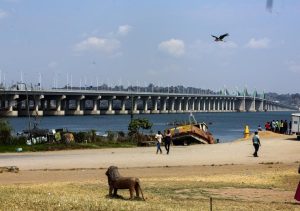
The Chinese-built Magufuli Bridge across Lake Victoria in Tanzania was inaugurated in June 2025, marking another landmark project under the Belt and Road Initiative. As the longest bridge in East and Central Africa, it not only improves local transportation but also enhances connectivity with neighboring countries. The bridge stands as a symbol of Tanzania’s self-reliance and a catalyst for regional development, Tanzanian President Samia Suluhu Hassan said at the inauguration ceremony.
On top of infrastructure, China’s growing role in technology transfer and digitalization is reshaping development possibilities, said Ndichu.
“Its engagement increasingly emphasizes capacity building, skills development, and value-chain integration rather than simple resource extraction.”
“China functions as both a stabilizing anchor and a key driver of industrial upgrading across the Global South,” said Herman Tiu Laurel.
“By prioritizing infrastructure development and technological innovation, China offers developing countries the practical means to build sustainable growth and achieve genuine economic autonomy,” he said.
Ismael Buchanan, senior lecturer in the Department of Political Science at the University of Rwanda, said China’s emphasis on inclusiveness aligns with the desire to ensure that the benefits of globalization are shared more broadly, rather than concentrated in a few advanced economies.
“China has offered additional development options for Global South countries. This engagement complements existing international efforts and contributes to a more diversified and balanced global economic system,” he added.
Source: Xinhua