By Ussiju Medaner
The life and legacy of Sheikh Dahiru Usman Bauchi stand as one of the most enduring chapters in Nigeria’s religious, moral, and social history. His journey, spanning nearly a century, was marked by profound scholarship, spiritual discipline, humility, philanthropy, and an unwavering commitment to peace and national unity. This is a life worthy of careful documentation and preservation for posterity.
Sheikh Dahiru Usman Bauchi was born on 29 June 1927 (2 Muharram 1346 AH) in Nafada, then part of the old Bauchi Province and now within present-day Gombe State. He was born into a family firmly rooted in Islamic scholarship and spiritual leadership. His father, Alhaji Usman Adam, was a highly respected Qur’anic reciter and a recognised Muqaddam (authorised leader) of the Tijaniyya Sufi Order, a lineage that profoundly shaped Sheikh Dahiru’s spiritual path and worldview.
From early childhood, Sheikh Dahiru was immersed in Qur’anic learning under his father’s tutelage. He memorised the entire Qur’an—becoming a Hafiz—before the age of twenty, a feat that laid the foundation for his lifelong devotion to Islamic scholarship. Encouraged to broaden his intellectual horizons, he travelled extensively across Northern Nigeria, studying under renowned scholars such as Shaykh Usman Zangon-Barebari, Shaykh Abdulkadir Zaria, and Shaykh Abubakar Atiku. These formative years shaped him into a scholar deeply grounded in classical Islamic sciences, spirituality, and ethical discipline.
By 1948, Sheikh Dahiru Bauchi began delivering public Qur’anic exegesis (tafsīr), offering profound insights into the meanings, moral guidance, and spiritual dimensions of the Qur’an. Over the decades, his reputation grew exponentially. His tafsīr sessions attracted thousands physically and millions through radio broadcasts, making him one of the most widely listened-to Islamic teachers in Nigeria. Beginning in 1976, his lectures were broadcast by Bauchi Radio Corporation, and from 1980, by Radio Nigeria Kaduna, particularly during Ramadan, cementing his status as a national religious voice.
Sheikh Dahiru Bauchi rose to become one of the most influential leaders of the Tijaniyya Order in Nigeria, eventually being widely acknowledged as its supreme spiritual leader within the country. Yet, his leadership was never sectarian. He consistently emphasised tolerance, discipline, ethical living, and peaceful coexistence, discouraging fanaticism and condemning extremism in all forms. His sermons stressed that Islam is a faith of mercy, balance, and justice, not violence or division.
Beyond scholarship, Sheikh Dahiru was renowned for his personal humility and generosity. Numerous accounts from close associates and beneficiaries attest that he regularly used his personal resources to support widows, orphans, students, and the destitute, often giving without concern for personal comfort. His philanthropy was quiet, sincere, and rooted in a deep sense of responsibility to humanity.
His commitment to education was monumental. Over his lifetime, Sheikh Dahiru Bauchi established hundreds of Qur’anic schools (tsangaya), memorisation centres, mosques, and learning institutions across Northern Nigeria. He actively promoted Qur’anic memorisation, producing generations of Huffaz—including many of his children, grandchildren, and thousands of students, thereby institutionalising Islamic education and making religious literacy accessible to ordinary Nigerians.
At the national level, his influence extended into formal religious governance. He served as Deputy Chairman of the Fatwa Committee of the Nigerian Supreme Council for Islamic Affairs (NSCIA), contributing to religious guidance and jurisprudential decisions that affected Muslim communities across Nigeria. Through mentorship and spiritual leadership, he directly and indirectly influenced tens of thousands, if not millions, of followers, many of whom became scholars, preachers, and community leaders.
Like many great figures, Sheikh Dahiru’s journey was not without challenges. He lived through periods of intense theological debate and ideological tension within Nigeria’s Islamic space, particularly between Sufi traditions and reformist movements. In 2009, during pilgrimage in Saudi Arabia, he was reportedly detained by Saudi authorities, an episode widely linked to doctrinal disputes involving Nigerian Islamic groups. Yet, he remained steadfast, dignified, and committed to peaceful propagation, he earned even greater respect for his resilience and moral courage.
Crucially, Sheikh Dahiru Bauchi was a consistent voice against religious violence. He openly condemned Boko Haram and other extremist groups, declaring their actions un-Islamic and destructive. Whether attacks targeted Muslims or Christians, his response was always measured—calling for justice, calm, and national unity rather than revenge. In a country often strained by ethno-religious tensions, his voice stood out as one of balance and wisdom.
Beyond religion, Sheikh Dahiru advocated ethnic unity and Nigerian nationhood. Though Fulani by heritage, he rejected ethnic chauvinism, urging Nigerians to see one another as partners in a shared destiny. His Ramadan tafsīr sessions became platforms not only for spiritual instruction but also for messages of peace, coexistence, and mutual respect across ethnic and religious lines.
Beyond his public scholarship and national influence, Sheikh Dahiru Usman Bauchi’s legacy is profoundly reflected in his family, lineage, and institutional footprintint. By widely reported and conservative accounts, the Sheikh was blessed with over 100 children, several hundreds of grandchildren, and a growing number of great-grandchildren, forming one of the largest scholarly family lineages in contemporary Nigerian Islamic history. His household was not merely large in number but exceptional in intellectual and spiritual output.
Among his children and descendants are hundreds of university graduates, including scholars trained in Islamic jurisprudence, Arabic studies, education, medicine, law, and other professional disciplines. More remarkably, a very significant proportion of his children, grandchildren, and students are Huffaz (memorisers of the Qur’an)—a direct reflection of the educational philosophy he lived and preached.
In terms of institutional impact, Sheikh Dahiru Bauchi’s contribution to Qur’anic education is unparalleled in scale. By widely cited estimates within Tijaniyya and Islamic education circles, he established and supervised more than 13,000 Qur’anic schools, memorisation centres, and learning institutions across Northern Nigeria and beyond. Through these institutions, well over 100,000 Huffaz are believed to have graduated under his direct or indirect guidance—making him one of the most prolific producers of Qur’an memorizers in West Africa’s modern history.
These schools were not elitist institutions. They catered deliberately to children from poor, rural, and underserved communities, offering free or highly subsidised Qur’anic education, accommodation, and welfare. Many beneficiaries later became teachers, imams, judges, community leaders, and professionals, carrying forward his values of discipline, humility, and service.
What distinguished Sheikh Dahiru’s educational mission was not just its scale, but its continuity and sustainability. His institutions were structured to outlive him—managed by trained scholars, family members, and trusted disciples—ensuring that the pipeline of Qur’anic education, memorisation, and moral instruction remains active long after his passing.
In this sense, Sheikh Dahiru Usman Bauchi did not merely teach; he institutionalised knowledge, multiplied scholars, and embedded Qur’anic literacy into the social fabric of generations. His family and students today stand as living evidence of a legacy that transformed faith into structure, compassion into systems, and scholarship into a civilisation-building force.
Sheikh Dahiru Usman Bauchi passed away in the early hours of 26 November 2025, at approximately 98 years of age, after a brief illness at the Abubakar Tafawa Balewa University Teaching Hospital, Bauchi. His death triggered nationwide mourning. Tributes poured in from religious leaders, political figures, institutions, and ordinary Nigerians whose lives he had touched. In accordance with his wishes, he was buried shortly after Jumu’ah prayer at his residence in Unguwar Jaki, Bauchi metropolis.
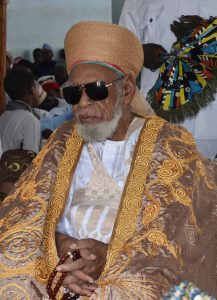
As Nigeria mourns his passing, it is also a moment of reflection. Sheikh Dahiru Bauchi leaves behind not merely memories, but living institutions, enduring values, and generations of scholars and believers who have been shaped by his teachings. His life exemplified the harmony of faith and compassion, scholarship and humility, tradition and adaptability.
In a nation grappling with insecurity, intolerance, and social fragmentation, Sheikh Dahiru Usman Bauchi remains a moral compass, a reminder that authentic leadership is rooted in service, patience, knowledge, and love for humanity. His legacy endures as a beacon of peace, tolerance, and spiritual integrity, lighting a path Nigeria desperately needs.
May his life continue to inspire future generations to walk the path of wisdom, unity, and peace.
Professor Medaner is reachable via: email: justme4justice@yahoo.com