
By Muhammad Maitela, Damaturu
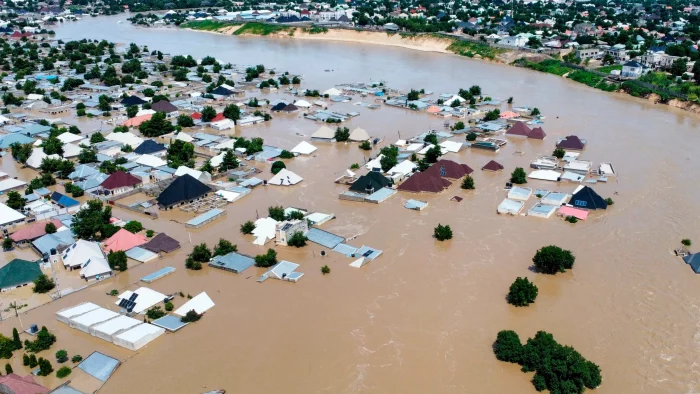
The 2024 Maiduguri flood devastated the physical structures of the ancient city of Borno state, as a result of heavy rains in September that caused the Alau Dam to collapse. About half of the city was submerged, displacing thousands of families, destroying homes, and crippling critical infrastructure. The flood has directly impacted over one million people in Maiduguri alone, with several communities completely cut off due to submerged roads.
According to the Borno State Emergency Management Agency, over 30,000 houses destroyed, and critical facilities, including schools, hospitals, and markets, have been inundated. The extensive damage to farmland, affecting more than 12,000 hectares, threatens food security in a region grappling with severe hunger and malnutrition.
Furthermore, the floods have affected some local government areas in Borno State, including Jere, Konduga, and Dikwa.
The residents of Maiduguri insisted that, the figures of deaths are much higher, when authorities say about 30 persons were lost their lives in the flooding, over 400, 000 residents were displaced and around one million people were generally altered, according to the National Emergency Management Agency (NEMA).
Also, the NEMA official clarified that, nearly half of Maiduguri was buried by the flooding, a critical infrastructure designed to regulate water flow and provide irrigation and drinking water, overflowed following heavy rainfall.
According to the experts, there had been cracks in the dam’s walls, and erosion had taken over the embankments, a result of years of abandonment that weakened its structure.
A few days before the flooding uproar, dozens of residents living near the dam were asked to leave for fear of impending hazards that may result from the overflowing dam. Forewarned again by residents and concerned people of Borno, the government insisted that the state was not under any flooding threats, claiming to have done some independent assessment of the dam.
But, some questions remain unanswered, as what was the root cause of this flooding that displaced hundred thousand of our people? And where are the institutions responsible for the matter like Nigeria Meteorological Agency (NiMET), and why didn’t we have accurate intelligence or early warning systems to forestall this disaster? Nigeria’s reactive approach to disaster management is a recurring theme; each year, communities face floods, and each year, relief arrives too late for many.
We can’t deny or ignore the impact of climate change on the current situation. Because this flood is not an incidental but part of a broader, troubling and of extreme weather events linked to global climate change. While in the year of 2022 alone, the flooding across Nigeria has displaced over 2.8 million people. Yet to take proactive measures, or how to tackle the issue. Sometimes, our policies and actions seem disconnected from the urgent need to build climate resilience.
The occurrence of these floods in Borno state and others are beyond the relief efforts, it is time for the governments; both Federal and state and stakeholders at all levels to address sustainable development, particularly poverty alleviation, environmental degradation, and the dire lack of requisite infrastructure that makes our communities vulnerable to disasters. It is time governments adopt proactive policies that anticipate potential disasters, rather than merely reacting after they occur. This includes monitoring dams and related infrastructure, regular updates to disaster response plans based on experiences, and integrating climate adaptation strategies.
During this trying time, the Borno State Governor, Prof. Babagana Umara Zulum, addressed the people of Maiduguri, expressing commitment to building infrastructures to avert future floods. “We shall leverage on this calamity as an opportunity to invest in sustainable practices and infrastructure that can withstand the forces of nature.” He pledged.
Gov. Zulum asked locals to cooperate with authorities over his fresh vow. “I invite and encourage other stakeholders to collaborate with our agencies to identify the best ways of assisting. Together, we can create a robust response plan that would address not only immediate needs, but also long-term recovery and rebuilding efforts.”
The Minister of Environment, Hon. Balarabe Abbas Lawal, during a sympathy visit to Borno State, said the Federal Ministry Of Environment deploys team to mitigate the aftermath of flooding in Borno State.
“The tragic event, it is imperative that the Ministry of Environment focus on the urgent need for a coordinated and comprehensive response to mitigate the resultant environmental challenges posed by the flood, during this visit, I informed the Borno State Governor, that the Federal Ministry of Environment will send a team of experts from the relevant department, agencies, and projects to collaborate with Borno State Government in addressing the impacts of the flood.”
He said, the Federal Ministry of Environment has deployed a team of experts comprising the following departments, agencies, and projects to help in mitigating the effects of the flooding, including the Department of Pollution Control and Environmental Health (PCE&H); Department of Erosion, Flood and Coastal Zone Management; Department of Forestry; Macroclimatic Resilience in Semi-arid Landscape Program (ACReSAL) Project; The Nigeria Climate Adaptation-Erosion and Watershed Project (NCAEWP -EIB); The National Park Services; and The Environmental Health Council (EHCON);
He said that, the above team of experts will carry out continuous water sampling and tests, identify sources of hazardous chemicals and take proactive measures to prevent waterborne diseases. Similarly, the team will maintain continuous sampling of water sources, which is essential for monitoring water quality, identifying contamination, as well as taking proactive measures to maintain public health and safety in the state. All agencies under the Ministry in Borno State have been directed to collaborate with the State Government to mitigate the effects of the flood disaster.
“So far, 100 drums of 40 kg of chlorine have been deployed to Borno State to disinfect water sources, ensuring safe drinking water and preventing waterborne diseases like cholera. Furthermore, the Ministry will deploy 30,000 flyers with a view to sensitise the public on best sanitation and hygiene practices which include proper waste disposal, frequent handwashing and personal hygiene with a view to reducing the spread of infections.
“Beyond immediate short-term response, the Ministry will also work closely with Borno State Government to develop comprehensive flood mitigation strategies and early warning mechanisms to safeguard against recurrences. We will also explore avenues for collaboration with international partners to strengthen the State’s capacity for disaster risk management and climate adaptation.” He explains.
The Environment Minister commended the proactive measures by the Borno State Governor, Prof. Babagana Zulum, in the face of this disaster. Added to that, the Governor’s swift response in mobilising resources and ensuring the safety and well-being of the affected communities, which is truly commendable. I am confident that Borno State will emerge stronger from this tragedy and the resilience of its people will once again shine through.
In his part, Comrade Amb. Bulama Abiso the Executive Director Network of Civil Society Organisations Borno State (NECSOB), and member of Maiduguri Flood Disaster Relief Disbursement Committee, constituted by the Borno state government. Added that, the root cause of the flooding, is the collapse of Alau Dam, influenced by the water, “the flooding caused to displaced hundred thousand of people in Maiduguri of Borno state; so it’s a natural disaster. And secondly, another factor, probably it’s lack of attention by the previous administration, particularly the federal government which has the most responsibility to take care.
“And I agree with you that the incident indicated climate change, because if you look at the nature of this year’s rain you would see some changes and it’s extended up to October; all this heavy rainfall is due to climate change. And this also can be another factor. So as a Civil Society Organization, we are actually having a lot of meetings, sensitization programmes to use all avenues responsible to mitigate the future occurrence of this flooding.” He said.
Comrade Bulama said, “this was a natural thing that we will not be able to curtail it completely but however we are currently setting with the government to see other measures of residents in the flooding area actually vacated to other places to give a maximum root for the water to follow. Sometimes, we also look for the economic angle on how to use this water, and probably more dams are needed or to expand it to help farmers along the water bank, as it’s very important.
“As a member of this committee; the main roles of this committee is only for disbarment of relief and I representing the CSO, and I think the government need to bring experts to set down and see the root cause of this flooding, then experts can provide their expertise ways through which event if it comes with effect it will minimised,” he said.