
From Femi Mustapha, in Kaduna
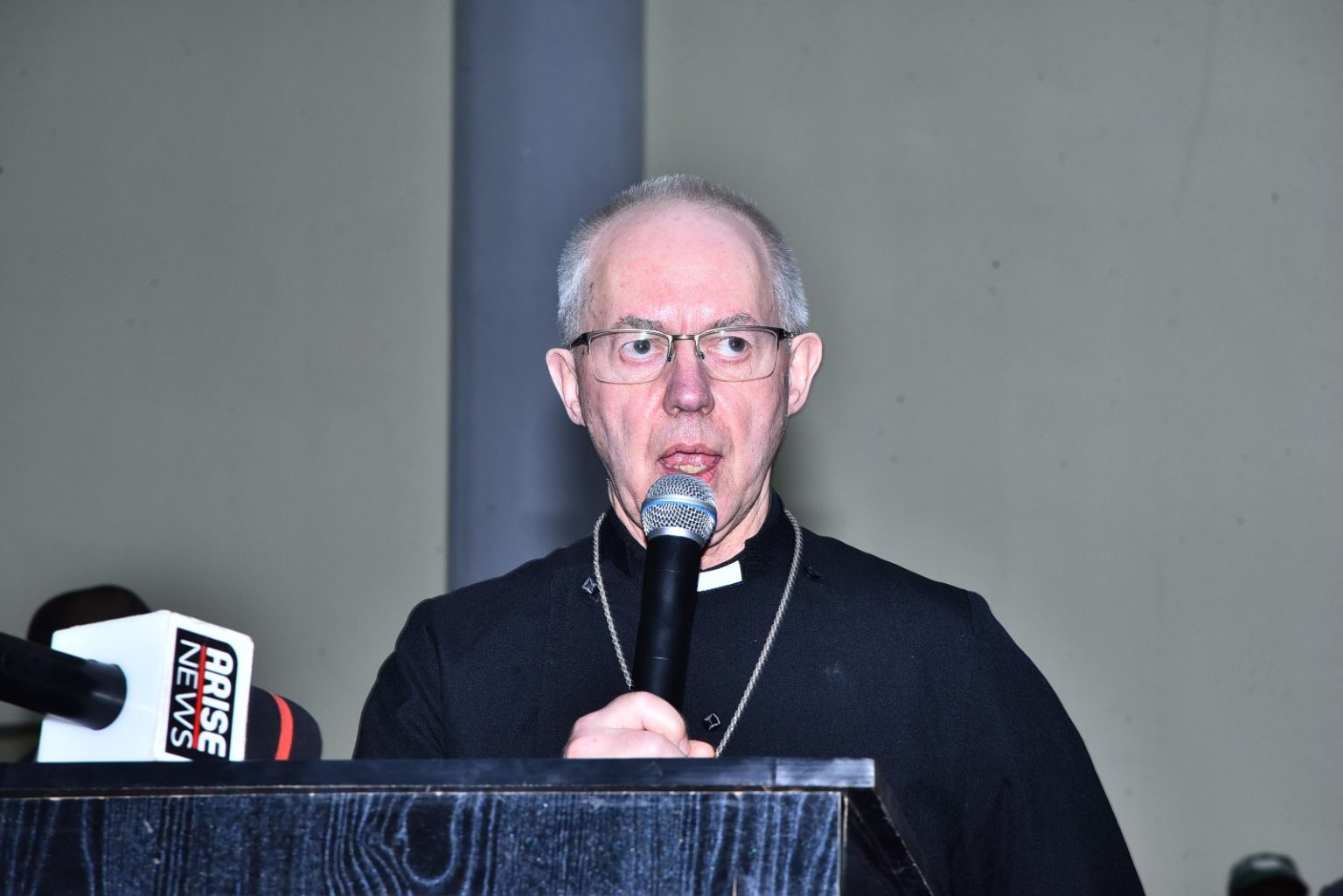
Former Archbishop of Canterbury, Rt. Rev. and Rt. Hon. Justin Welby, GCVO, has declared that the future of Nigeria must be decided by Nigerians themselves, without surrendering its sovereignty.
Speaking at a public lecture organised by Ahmadu Bello University, Zaria, as part of activities marking the institution’s 45th Convocation Ceremony, Welby explained that the task was not the responsibility of the government alone.
“That means those in political, economic, spiritual, social, legal, traditional, and other leadership must be willing, among many other demands, to take responsibility for guarding the sovereignty of Nigeria,” he said. The lecture, titled _‘Building Inter‑Ethnic and Religious Harmony in Nigeria: Pathways to National Unity’_, took place at the Abdullahi Mahadi Conference Centre, Ahmadu Bello University, Main Campus, Samaru, Zaria.
Welby stressed that inter‑ethnic and religious harmony requires that Nigeria’s sovereignty be committed to confronting its own weaknesses, seeking support when needed, and informing where necessary. He added that such harmony would be a vain dream unless it is built on history and reflects the political, economic, and physical environments, including international dimensions.
Essentially, the lecture addressed four areas: the foundations for inter‑faith and ethnic harmony and for building national unity; the global environment; the values needed; and what must be done, taking into account the interaction of social, economic, and political conditions in Nigeria and abroad.
He stated that Nigerians must also embrace honesty in building inter‑ethnic and religious harmony. Welby asserted that in no country could corruption be wiped out, stressing that, like weeds in a field, it must be fought fiercely if there is to be a good crop. “Honesty values truth about a problem. Honesty means saying what we mean, clearly and plainly. It means being honest about the faults of our own faith community and nation, recognising its weaknesses and standing with the oppressed. To act in deceit, without the truth, the whole truth and nothing but the truth, is to sow the seeds of terror,” he said.
Transparency, he added, is also necessary; any action, except security actions, which cannot be revealed in advance, must be explained transparently. Welby described as “always foolish” hiding the truth of the state of the nation, as transparency requires public accountability.
The religious leader also pointed out that decisive action is equally key to addressing inter‑ethnic and religious crises. Decisive action, according to him, requires “firm leadership and a willingness to act, top‑down, middle‑out, bottom‑up.” He also talked about the need for seeking the common good as a value for building inter‑ethnic and religious harmony, saying the common good is about treating everyone equally, without fear or favour.
Welby emphasised the value of theology, saying there must be genuine theological dialogue, not “tea or cake” meetings where nothing of the essence of faith is considered. The task for each religious leader, according to him, is not to make himself famous but to glorify God. “More than that, it is to do everything possible to have a stable, peaceful, and law‑abiding society, and to work with secular rulers to that end,” he said.
He stressed that there will be no political peace in Nigeria without religious peace and that no justice in society exists without religious teaching and justice. It is religious leaders who can demonstrate national unity, he said, adding that he did not mean unanimity, as no nation has total agreement.
“Unity is the quality of learning to disagree agreeably, to care for the hungry man, for the girl or boy who is uneducated, for the woman who is ignored and whose skills are not valued. They must be cared for not because they are Muslim or Christian, but because they are human,” he concluded.