From Femi Mustapha, in Kaduna
The Civil Society Scaling up Nutrition in Nigeria (CS-SUNN) has sounded the alarm about the country’s persistent public health challenge of anaemia, affecting millions of people, particularly women and children.
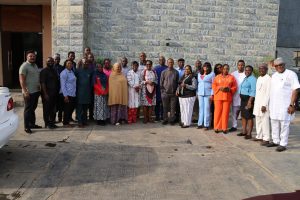
The organization’s Executive Secretary, Sunday Okoronkwo, in his welcome remarks at a three-day capacity-building workshop on strengthening the media’s role in anaemia prevention in Nigeria, organized by CS-SUNN, described anaemia as a preventable yet persistent issue, urging journalists to play a critical role in promoting awareness and advocating for action.
“The most affected are women and children, and they cannot speak for themselves.
“They depend on the media to speak up about what they go through and to keep these issues on the front burner,” Okoronkwo said during the workshop,” he said.
Okoronkwo emphasized the importance of media engagement in amplifying the message of anaemia prevention, highlighting CS-SUNN’s community-based interventions, including nutrition education and supplementation programs.
He urged journalists to go beyond statistics and tell human-centered stories that can drive policy action.
“Your stories have the power to move those in authority to do what they ought to do. Prevention through adequate nutrition remains more cost-effective than emergency interventions,” he said.
The CS-SUNN Executive Director disclosed that the organization’s efforts are not limited to community-based interventions but also advocate for policies that support anaemia prevention, such as the fortification of staple foods with essential micronutrients.
“Media coverage of anaemia can help raise awareness about the importance of nutrition and health, promoting behavior change,” Okoronkwo said.
“The media has a critical role to play in promoting awareness and advocating for action on anaemia.” With increased awareness, education, and support, Nigeria can be made anaemia-free, and the media is a key catalyst in this effort, ” he said.
Mrs. Funmilola Adegbite Bolape, Head of the Nutrition Department at the Federal Ministry of Health and Social Welfare (FMoHSW), revealed that Nigeria faces a heavy burden of micronutrient deficiencies, especially among children under five and women of reproductive age.
According to the National Demographic and Health Survey (NDHS) 2023-2024, 40% of children under five are stunted, while 58% of women of reproductive age are anaemic.
Represented by Princess Helen Achimugu Mathew, Assistant Director, Coordinating Unit, Nutrition in the Ministry, Mrs. Bolape attributed the situation to dietary patterns, food insecurity, and socioeconomic factors, saying, “Nigeria faces a heavy burden of micronutrient deficiencies, especially among children under five and women of reproductive age.”
She explained that micronutrient deficiencies, often referred to as “hidden hunger”, are a major contributor to maternal mortality and child morbidity.
The key micronutrients of concern are Vitamin A, Iron, Iodine, Zinc, and Folate. “Their deficiency is often called ‘hidden hunger’ because symptoms may not be visible but affect health and productivity,” she said.
Anaemia, a condition in which haemoglobin levels are insufficient to meet physiological needs, is a significant public health concern.
To address the issue, the government has implemented various interventions, including Vitamin A supplementation, iron-folate supplements for pregnant women, and deworming programs.
The government has also introduced Multiple Micronutrient Supplementation (MMS), which has been proven to be efficacious, safe, and cost-effective.
“We are committed to ensuring that every pregnant woman in Nigeria has equitable access to MMS as part of ANC standard of care for improved pregnancy and birth outcomes,” Mrs. Bolape said.
Mr. Geoffrey Njoku, PHD a resource person, emphasized the importance of story mining in uncovering the hidden hunger of anaemia.
“Story mining is about deep-diving into communities to find authentic narratives,” he said. “It’s about shifting from expert-only reporting to community-led reporting, and using local terms to describe anaemia, such as ‘lack of blood’ or ‘blood hunger’.”
The media has a critical role in promoting awareness and advocating action on anaemia.