
By Femi Mustapha, in Kaduna
The recent designation of Nigeria as a Country of Particular Concern (CPC) by the United States has ignited a national discussion about the root causes of religious persecution in the country.
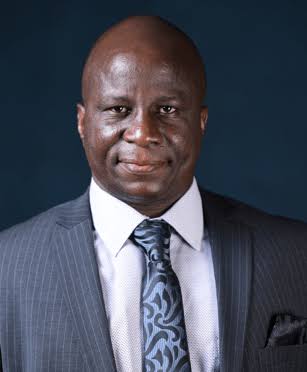
Rev. David Ugolor, Executive Director of the Africa Network for Environment and Economic Justice (ANEEJ), asserts that corruption is a significant driver of the violence and insecurity plaguing the nation.
In a statement made available to the media in Kaduna, Rev. Ugolor contends that the government’s failure to protect its citizens, along with the alarming rise in attacks against Christian communities, reflects a larger issue—an ineffective state weakened by corruption.
He points out that funds intended for schools, hospitals, and military equipment are being embezzled by political and military elites, leaving entire communities vulnerable to violence.
Rev. Ugolor calls for a renewed partnership between the government, civil society, and international allies to combat corruption and recover stolen assets. He urges the Nigerian government to recognize corruption as a national security threat and to transparently use recovered assets to rebuild communities devastated by violence.
He welcomes recent developments in the United States, including the Kleptocracy Asset Recovery Rewards Act and the Counter-Kleptocracy Coordination Act, which offer powerful tools for tracing, freezing, and repatriating stolen assets.
Rev. Ugolor advocates for the establishment of a joint Nigeria-U.S. asset recovery and accountability framework focused on transparency and community reinvestment.
He emphasizes that the fight against corruption is not merely an anti-corruption initiative but a peacebuilding mission. “When looted wealth is returned and used to heal broken communities, justice—not violence—becomes the loudest voice in the land,” he states.