
By Mohammed Danlami
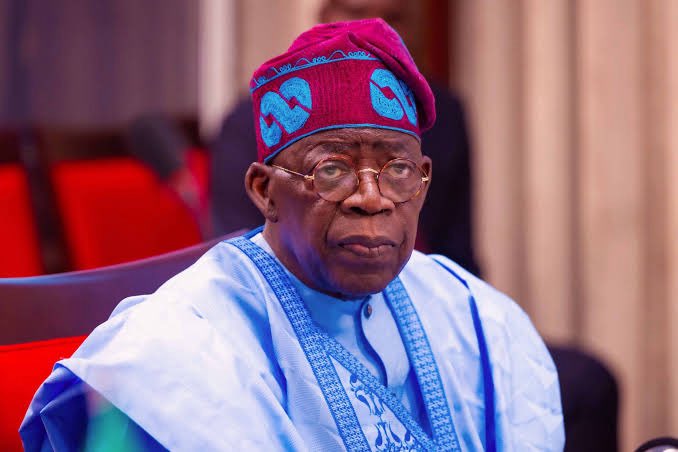
President Bola Ahmed Tinubu has reaffirmed his administration’s commitment to constitutional reforms that will strengthen Nigeria’s institutions, promote justice, and guarantee fundamental rights.
He also called on Nigerians to actively participate in the ongoing constitutional review process, describing it as a historic opportunity to entrench good governance, inclusivity, and sustainable development.
Speaking through the Secretary to the Government of the Federation (SGF), Senator George Akume, at the National Public Hearing on the Review of the 1999 Constitution (as amended), held Monday in Abuja, Tinubu described the exercise as a “golden opportunity” to advance democracy and nation-building.
The President commended the House of Representatives Committee on Constitution Review, chaired by Deputy Speaker Rep.Benjamin Okezie Kalu, for creating an inclusive platform that engages citizens, civil society, political parties, professional groups, and traditional institutions in the amendment process.
“The Constitution is the supreme law of the land. It is not static, but a living document that must continually respond to the realities, aspirations, and challenges of our people,” Tinubu said.
He stressed that the ongoing review must aim to deepen federalism, entrench equity and accountability, and provide Nigerians with stronger democratic institutions that safeguard their freedoms.
According to him, the review aligns with his administration’s Renewed Hope Agenda, which seeks to deliver good governance, social justice, and economic transformation across the country.
Tinubu assured Nigerians that his government would continue to support reforms that give meaning to participatory democracy and advance national unity.
“I urge all participants to approach this exercise with a spirit of patriotism, responsibility, and constructive dialogue,” the speech read. “The quality of ideas generated here will go a long way in shaping the laws and institutions that will serve generations yet unborn.”
On behalf of the Federal Government, the statement expressed optimism that the deliberations would produce meaningful outcomes capable of strengthening unity and prosperity.
“I wish the Committee and all stakeholders fruitful deliberations, and I assure you that the outcome of this process will receive the deserved attention as part of our collective quest to build a stronger, more united, and prosperous Nigeria,” it stated.
The Speaker of the House of Representatives, Rep Hon. Abbas Tajudeen and the Deputy Speaker, Rep. Benjamin Kalu, unveiled far-reaching proposals at the National Public Hearing on the Review of the 1999 Constitution.
Speaker Tajudeen, who formally declared the hearing open, described the exercise as “a significant moment in Nigeria’s democratic journey,” stressing that Nigerians themselves—not just politicians—must shape the supreme law of the land.
He assured citizens that the process would not be bogged down by delays, promising expedited passage of the amendments through the National Assembly and prompt transmission to State Assemblies.
“Reform delayed is reform denied, and Nigerians deserve clarity and closure,” the Speaker declared. “We intend to vote on the proposals expeditiously and give the States enough time to deliberate and endorse the people’s will.”
The Speaker highlighted several transformative amendments under consideration:
Reserved seats for women in the National and State Assemblies, aimed at accelerating gender inclusion and addressing Nigeria’s dismal five percent female representation in parliament.
Guaranteed representation for persons with disabilities, alongside gender quotas in ministerial appointments.
Formal advisory roles for traditional rulers in peacebuilding and community security.
He argued that such reforms would make Nigeria’s democracy more representative, responsive, and just.
The Speaker further noted that many proposals align with President Bola Ahmed Tinubu’s Renewed Hope Agenda, providing the “legal chassis” for reforms in security, economic revitalisation, inclusivity, and transparent governance.
Earlier, Deputy Speaker Benjamin Kalu, Chairman of the Constitution Review Committee, underscored the depth of consultations that informed the process. He disclosed that the committee received and compiled 87 amendment bills from nationwide public hearings, memoranda, and regional engagements.
Among the most consequential proposals are: Electoral reforms, including independent candidacy, an Electoral Offences Commission, and strict timelines for pre-election dispute resolution.
Devolution of powers, with a landmark bill to move policing from the Exclusive to the Concurrent List, paving the way for state and community police.
Local government autonomy, ensuring financial and administrative independence for grassroots governance.
Kalu emphasised that the proposals were not legislative impositions but the “thought-out demands and memoranda of the Nigerian people themselves.”
“The ultimate authority for this process resides with you, the sovereign people of Nigeria,” the Deputy Speaker said. “Constitutional reform is a marathon, not a sprint. Your continued engagement is crucial to see this through.”
Both leaders assured Nigerians that the process would be transparent, participatory, and shielded from political manipulation. The final harmonised version of the amendments, they pledged, will be published before voting in plenary.
They also urged citizens to hold their lawmakers accountable and engage State Assemblies to prevent reforms from being diluted or discarded.
Speaker Tajudeen called on stakeholders—including civil society, labour unions, traditional rulers, youth, women, and the media—to present clear, solution-driven positions at the hearing.
“By improving our constitution, we write a new chapter in our national story,” he said. “Let it be remembered that we chose courage over caution, unity over discord, and posterity over short-term politics.”
The hearing marks the final stage of public consultation before the National Assembly begins voting on the 87 proposed amendments.
If passed and ratified by at least 24 State Houses of Assembly, Nigeria could soon witness its most sweeping constitutional overhaul since 1999—reshaping its governance, security, inclusivity, and democratic accountability for generations to come.